





Ghanaian human rights leader calls for global action on North Korea at International seminar
 Human Rights Reporters
A powerful voice from Ghana echoed across an international stage on Friday as Dr. Joseph Kobla Wemakor, Executive Director of Human Rights Reporters Ghana (HRRG), issued a stirring call to action for the global community to step up its efforts in confronting the human rights crisis in North Korea.
Speaking at the International Seminar on Enhancing Human Rights Activities in North Korea, Dr. Wemakor urged global leaders, activists, and institutions to unite under a common cause: to restore freedom, dignity, and justice for the North Korean people.
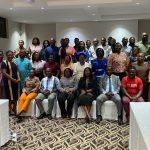
The event, which drew political and human rights figures from around the world—including representatives from the United Nations, European Union, and North Korean defectors—served as a platform to share testimony, research, and policy strategies aimed at driving change in one of the most repressive regimes on earth.
From Ghana to the Global Stage
Dr. Wemakor began his address by spotlighting the work of HRRG, the grassroots organization he founded in 2019. HRRG, based in Accra, has earned international acclaim for its fearless advocacy, legal support for marginalized communities, and commitment to exposing human rights violations across Africa and beyond.
“Our team is composed of passionate young journalists, legal professionals, human rights activists, and social advocates united by a common goal—to make human rights a lived reality for all,” Wemakor said.
The organization’s growing influence has been recognized through several prestigious accolades, including the 5th UN Global Entreps Award and Africa Peace Advocate Award by the International Association of World Peace Advocates.
But as Wemakor reminded the audience, HRRG’s ambition reaches far beyond accolades.
A South Korean Case That Sparked Global Momentum
Wemakor’s keynote drew parallels between the situation in North Korea and a landmark advocacy victory in South Korea—a case that illustrated the impact of coordinated international pressure.
In 2020, HRRG took up the cause of Mr. Lee Man-hee, the 89-year-old founder of the Shincheonji Church of Jesus Christ. During the early days of the COVID-19 pandemic, Lee was accused of withholding information about his congregation, resulting in his arrest and widespread persecution of his followers.
“Over 220,000 Shincheonji believers faced harassment,” Wemakor explained, citing more than 5,500 documented human rights abuses, including forced conversions.
Through intense media advocacy, collaboration with international partners, and relentless public engagement, HRRG helped turn the tide. Mr. Lee was eventually released, and the incident sparked international debate on religious freedom and scapegoating.
“This victory was not ours alone,” Wemakor emphasized. “It was a testament to what is possible when we stand together.”
North Korea’s Deepening Crisis
Turning attention to North Korea, Dr. Wemakor painted a bleak but urgent picture. “North Korea’s human rights situation is one of the direst in the world,” he said. “Freedom of expression, movement, and belief are severely restricted under a regime that prioritizes control over humanity.”
The testimonies of defectors—some present at the seminar—served as haunting reminders of the brutality many endure. Forced labor, starvation, torture, and public executions remain common tools of state control.
Yet, despite years of UN reports and global awareness campaigns, meaningful progress remains elusive.
African Solidarity as a Catalyst for Change
Drawing from Africa’s own painful history of colonialism and oppression, Wemakor called on the continent’s leaders and civil society to step forward.
“We, as Africans, understand the weight of systemic oppression,” he said. “Our experiences equip us with a unique perspective—and a moral responsibility.”
He outlined four strategic pillars for advancing human rights in North Korea:
- Leveraging Media Advocacy
Wemakor urged media organizations across Africa and the globe to amplify the voices of defectors and spotlight the regime’s abuses. He also encouraged the use of social media platforms like X (formerly Twitter) to launch viral campaigns that can’t be ignored. - Building Global Coalitions
By aligning with international bodies like the African Union and ECOWAS, and forming dedicated coalitions of African human rights organizations, a stronger, unified voice can emerge in support of North Korean freedom. - Empowering Defectors
Defectors, Wemakor said, are the most powerful advocates. Their stories must be heard, and their safety must be ensured. He proposed funding, training, and safe asylum opportunities—particularly in Africa. - Policy-Based Pressure
Finally, he called for concrete policy steps: a UN mechanism for ongoing monitoring, targeted sanctions on the regime’s leadership, and humanitarian aid that bypasses government interference to reach those in need.
A Call to Action
In his closing remarks, Dr. Wemakor returned to the heart of his message: that change is possible—even when it seems unlikely.
“When HRRG took on the Shincheonji case, we faced skepticism. How could a small Ghanaian NGO take on a global issue?” he reflected. “But we proved that determination, collaboration, and courage can move mountains.”
He challenged those in attendance—leaders, scholars, defectors, media representatives—to be architects of change.
“Let us commit to amplifying North Korea’s voiceless, building coalitions, and pressing for policies that uphold dignity,” he said. “Together, we can turn hope into action and justice into reality.”
As the applause echoed through the conference hall, it was clear that Dr. Wemakor’s message had struck a chord. His words were more than a speech they were a rallying cry.
And the world, it seems, is beginning to listen.


About The Author
