







Dr. Joseph Wemakor leads the charge against child and forced labour at HRRG workshop
 Human Rights Reporters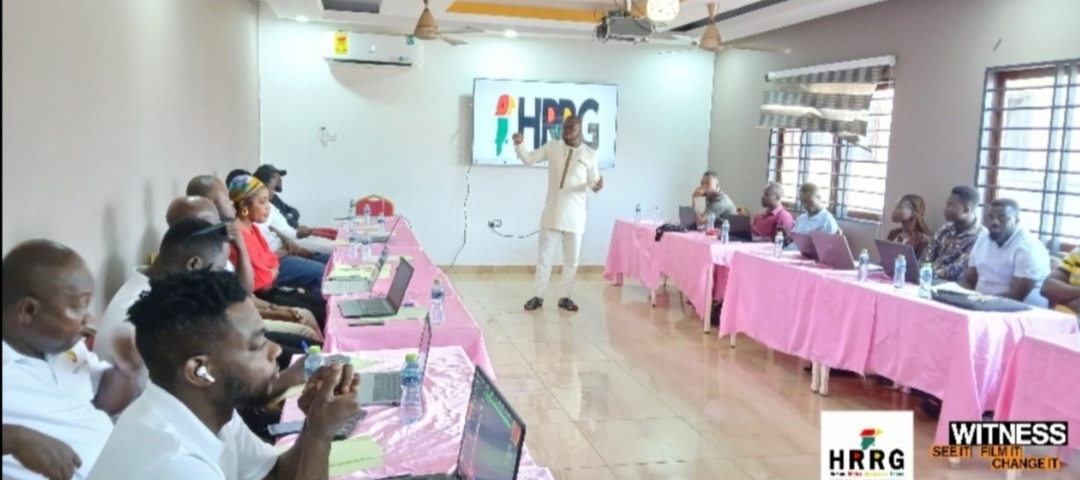
Executive Director of Human Rights Reporters Ghana (HRRG), Dr. Joseph Wemakor, on Friday, January 17, 2025, spearheaded a crucial capacity-building workshop aimed at combating child and forced labour in the Asante Akyem Agogo community, located in the Ashanti Region of Ghana.
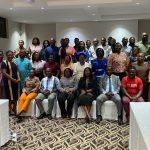
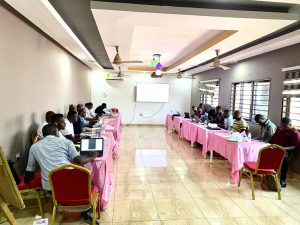
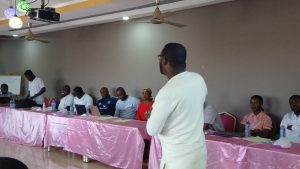
Hosted at the elegant Masanita Royal Hotel, the event brought together over 30 committed participants, including journalists, human rights defenders, representatives from civil society organizations (CSOs), and community leaders.
Kicking off the workshop, Dr. Wemakor delivered a powerful address on the alarming prevalence of child labour and its devastating impact on children, families, and communities.
He emphasized the urgent need for collective action and innovative solutions to tackle this pressing issue. “We must come together as advocates, journalists, and community leaders to create lasting change. The future of our children depends on our immediate actions,” he stated passionately.
The workshop, themed “Combating Child and Forced Labour through Video Verification Techniques,” was designed to empower attendees with essential skills to utilize video technology effectively in their advocacy efforts.
Participants learned to develop strategies for monitoring child and forced labour instances and aimed to establish a network of stakeholders dedicated to eradicating these violations in Asante Akyem Agogo and surrounding areas.
Another key speaker, Edem Damanka, Executive Director of Edmark Rescue Foundation, echoed Dr. Wemakor’s sentiments on the importance of community engagement.
He remarked, “We must empower our communities to recognize the signs of child labour and work together to create lasting change. Only through collective efforts can we protect our children and ensure a better future.”
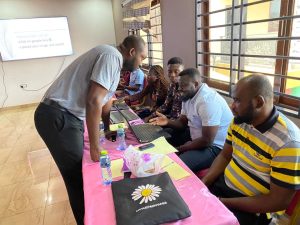
One of the workshop’s highlights was a session led by facilitator Kwame Adarkwah Yiadom, who highlighted geo-mapping technology and advanced photo and video verification techniques.
Mr. Yiadom demonstrated how this innovative tool can authenticate videos, ensuring that reports of child and forced labour are credible and evidence-based. Attendees learned how to track the location, time, and context of recorded videos, significantly enhancing their advocacy and monitoring capabilities.
The training facilitated a dynamic exchange of ideas among participants, who shared various perspectives on effectively addressing child and forced labour within their communities.
Many expressed their commitment to creating a collaborative network aimed at eradicating child labour, which would serve as a valuable platform for sharing resources and best practices.
Feedback from participants was overwhelmingly positive.
Vincent, a reporter from Asempa Radio, praised the organizers for the insightful program and highlighted the necessity of regular training sessions.
“If this can happen about three or four times a year, it would be very helpful,” he said.
Additionally, journalist Miss Adepa Yalley noted, “It’s been incredibly impactful, and I will implement everything I learned. The knowledge gained will significantly support the fight against child labour in our community.”
The workshop underscored the importance of united efforts in combating child and forced labour.
HRRG’s innovative approach to integrating video verification techniques received significant praise and demonstrated a promising potential to enhance the fight against these social injustices.
Looking ahead, HRRG plans to strengthen the newly formed stakeholder network and assist participants in applying digital verification techniques in their respective regions.
The event was made possible through generous funding from WITNESS, a global human rights organization dedicated to empowering individuals to leverage video and technology for human rights protection.
This initiative stems from Dr. Joseph Kobla Wemakor’s selection for the ‘Fortifying the Truth Cohort’ by WITNESS, where he participated in intensive training in community-based digital verification techniques in Abuja, Nigeria, from May 29 to 31, 2024.
With such dedication and collaboration, the fight against child and forced labour in Ghana is poised for a transformative change.



About The Author
