





 Human Rights Reporters
The Legal Aid Commission of Ghana has officially launched the 2025 Legal Aid Week Celebration at the Kempinski Hotel Gold Coast City in Accra under the theme “The Role of the Legal Aid Commission in Enhancing Access to Justice for Women and Girls in Ghana: Harnessing the Maputo Protocol.”
The week-long celebration, which runs from October 27 to November 2, 2025, seeks to raise national awareness about the importance of free legal aid services, particularly for women and girls, and to reaffirm Ghana’s commitment to gender equality and human rights in line with the Maputo Protocol, which marks its 20th anniversary this year.
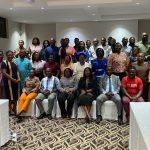
The launch brought together government officials, legal practitioners, international partners, civil society leaders and women’s rights advocates to reflect on Ghana’s progress in advancing legal empowerment for women and girls.
Delivering the keynote address on behalf of the Vice President, Hon. Harriet Brew Appiah-Oppong, Legal Counsel to the President conveyed the government’s appreciation to the Legal Aid Commission and its partners for reviving the Legal Aid Week after nearly a decade.
She emphasized that access to justice is both a constitutional and moral obligation, firmly rooted in Article 294 of Ghana’s 1992 Constitution, which guarantees legal aid for all.
“By ensuring that justice is accessible to the poor and marginalized, the Commission contributes directly to peace, stability, and good governance—pillars upon which national development depends,” the Vice President noted.
She highlighted several milestones achieved in advancing women’s rights, including the passage of the Affirmative Action and Gender Equality Act, 2024 (Act 1121), and the National Gender Policy of 2015, describing them as evidence of Ghana’s continuous commitment to equality and inclusion.
Despite these achievements, she acknowledged that many women, especially in rural communities, continue to face barriers such as cost, distance, and lack of legal awareness, which hinder their access to justice.
The Vice President therefore called for strengthened collaboration among state agencies, civil society, and the private sector to expand access to free legal aid.
She also commended the Legal Aid Commission’s innovative plan to establish a 24-hour legal aid call centre as part of the government’s 24-hour economic policy, describing it as a major step toward ensuring continuous and inclusive justice delivery across the country.
In his remarks, the Executive Director of the Legal Aid Commission, Mr. Edmund Amarkwei Foley, expressed gratitude to government, GIZ, and other development partners for supporting the revival of Legal Aid Week.
He reaffirmed that the Commission, established under the Legal Aid Commission Act 2018 (Act 977), is an independent public institution mandated to provide legal representation, advice, and public education to indigent persons in both civil and criminal matters.
“Many Ghanaians are still unaware that the state has an institution providing legal aid freely to those who cannot afford it,” he said.
Mr. Foley revealed that the Commission currently has 193 staff operating across 45 district offices nationwide, and continues to expand its outreach through gender desks and the use of alternative dispute resolution (ADR) mechanisms.
He explained that this year’s celebration aligns with the 20th anniversary of the Maputo Protocol, a landmark African treaty affirming women’s right to access justice, and that throughout the week, the Commission will hold legal clinics, fairs, and school outreach programmes to empower women and educate young people about gender equality and human rights.
“If we get justice for her, we achieve progress for all,” he declared.
Representing the German Development Cooperation (GIZ), Dr. Stefano Kareklas reiterated GIZ’s commitment to supporting Ghana’s justice sector through its Access to Justice Programme.
“Legal aid is a right and a cornerstone of human rights,” he emphasized, warning that when justice is denied because of cost or complexity, inequality and discrimination prevail.
He highlighted GIZ’s initiatives in supporting community-based legal aid, training of prison inmates, and promoting mediation as evidence that access to justice can transform lives and restore dignity.
He called on policymakers to prioritize sustainable funding for legal aid, simplify judicial procedures, and ensure services are accessible to all, including persons with disabilities.
Dr. Brenda Akia, Vice Chair of the UN CEDAW Committee, commended Ghana for aligning its national efforts with international obligations under the CEDAW Convention and the Maputo Protocol.
Through vivid examples, she drew attention to the real struggles faced by women denied property rights or subjected to domestic violence, stressing the need to make justice affordable and accessible.
She emphasized that gender stereotypes and economic barriers remain major obstacles to equality before the law.
In a statement delivered on her behalf, Her Excellency Janet Ramatoulie Sallah-Njie of the African Commission on Human and People’s Rights applauded Ghana for dedicating the 2025 Legal Aid Week to women’s access to justice.
She described legal aid as a vital component of the Maputo Protocol’s Article 8, which guarantees equality before the law, and urged continuous investment in legal aid to prevent discrimination against vulnerable groups such as widows, women with disabilities, and the poor.
The event concluded with a renewed national call to action.
Stakeholders from government, the judiciary, development agencies, civil society, and the private sector were urged to contribute to the Legal Aid Fund to strengthen the Commission’s operations and expand its reach.
Declaring the 2025 Legal Aid Week officially launched, the Vice President reaffirmed the government’s commitment to ensuring that justice in Ghana is not a privilege but a right accessible to all—particularly women and girls whose empowerment remains essential to national progress.


By: Joseph Wemakor|Editor-In-Chief
About The Author
