





Dr. Wemakor Leads UN@80 Conference With Powerful Call: ‘Youth Leadership Is Not Optional’
 Human Rights Reporters
Founder & Executive Director of Human Rights Reporters Ghana (HRRG), Dr. Joseph Kobla Wemakor, has issued a strong call for the institutionalization of youth leadership and participation, declaring that meaningful youth inclusion is not optional but “a development imperative in an era defined by climate threats, conflict, unemployment, digital risks, and shrinking civic spaces.”
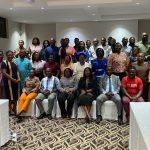
Dr. Wemakor made the call while addressing diplomats, civil society leaders, women’s rights advocates, academics, and youth groups at a landmark National Civil Society Conference held at the UPSA Auditorium in Accra to commemorate the 80th Anniversary of the United Nations (UN@80) and the 2025 International Human Rights Day.
He stressed that no country can achieve the Sustainable Development Goals (SDGs) without empowering its youth, who constitute the largest demographic in Ghana and across much of Africa.
Speaking also as the Convener of the Youth Sub-Platform of the Ghana CSOs Platform on the SDGs, Dr. Wemakor highlighted key challenges confronting Ghanaian youth, including limited participation in policymaking, rising unemployment, digital misinformation, and heightened vulnerability to drug abuse, violence, and radicalization.
Showcasing the transformative work of Human Rights Reporters Ghana, he pointed to initiatives such as the KTT Campaign, which has educated more than 60,000 Ghanaians on critical issues including kidnapping, teenage pregnancy, and substance abuse.
“Youth are not just beneficiaries of policy; they are key agents of change. When young people are empowered, societies thrive,” he said.
Dr. Wemakor called on government, civil society, and the UN system to adopt a bold, youth-centered agenda by institutionalizing youth participation, protecting civic freedoms, investing in innovation and digital literacy, strengthening partnerships, and prioritizing marginalized youth.
“Youth leadership is the engine of national progress. Token inclusion is not enough; we need real power-sharing and opportunities for the next generation,” he concluded.
The conference was organized by the Coalition of NGOs Associated with the UN Department of Global Communications (DGC) Ghana and brought together a broad cross-section of stakeholders to reaffirm the central role of civil society in safeguarding human rights and strengthening multilateral cooperation.
The Special Guest of Honour, Rev. Canon Dr. Lawrence Tetteh, Chief Patron of the International Youth Network for United Nations Security Council Resolution 2250 (IYNUNSCR), emphasized the universality of human dignity.
He urged Ghanaians to reject discrimination in all its forms, defend fundamental freedoms, and uphold interfaith harmony as a foundation for peaceful coexistence and national unity.
In a strong call for gender justice, Dr. Angela Dwamena Aboagye, Executive Director of The Ark Foundation, warned that persistent inequalities continue to undermine Ghana’s human rights progress.
She urged policymakers to strengthen law enforcement, expand women’s leadership opportunities, protect vulnerable groups, and support families as a foundation for human rights protection.
Dr. Dwamena underscored that investing in women is an investment in society as a whole, noting that women bear the brunt of unpaid care and domestic labour while contributing disproportionately to national development.
Mrs. Theophiline Bannerman, Convener of the Coalition of NGOs Associated with the UN DGC, described civil society as “the lifeblood of global cooperation,” stressing the indispensable role of non-state actors in holding governments accountable.
“Civil society is where the voices of the marginalized find resonance. Our advocacy ensures that policies reflect the realities of ordinary people, not just the rhetoric of officials,” she stated.
Mrs. Bannerman also called for enhanced collaboration between NGOs, government agencies, and the UN system to address pressing societal challenges, particularly those affecting women, children, and youth.
Adding a continental perspective, Nana Yaa Serwaa Sarpong, Executive Director of EIB Network, stressed the need for stronger investment in women’s participation across all sectors.
“For Africa to thrive, we must create spaces where women lead, innovate, and make decisions that shape our economies, communities, and governance,” she stated. “Gender equality is not just a women’s issue—it is a national imperative.”
The conference concluded with a unified call for strengthened collaboration among civil society, government, and global partners to advance human dignity, gender justice, youth empowerment, and sustainable development, as the United Nations enters a new decade of global action.
About The Author
