







African Child Rights Marshal advances continental push for stronger grassroots child protection
 Human Rights Reporters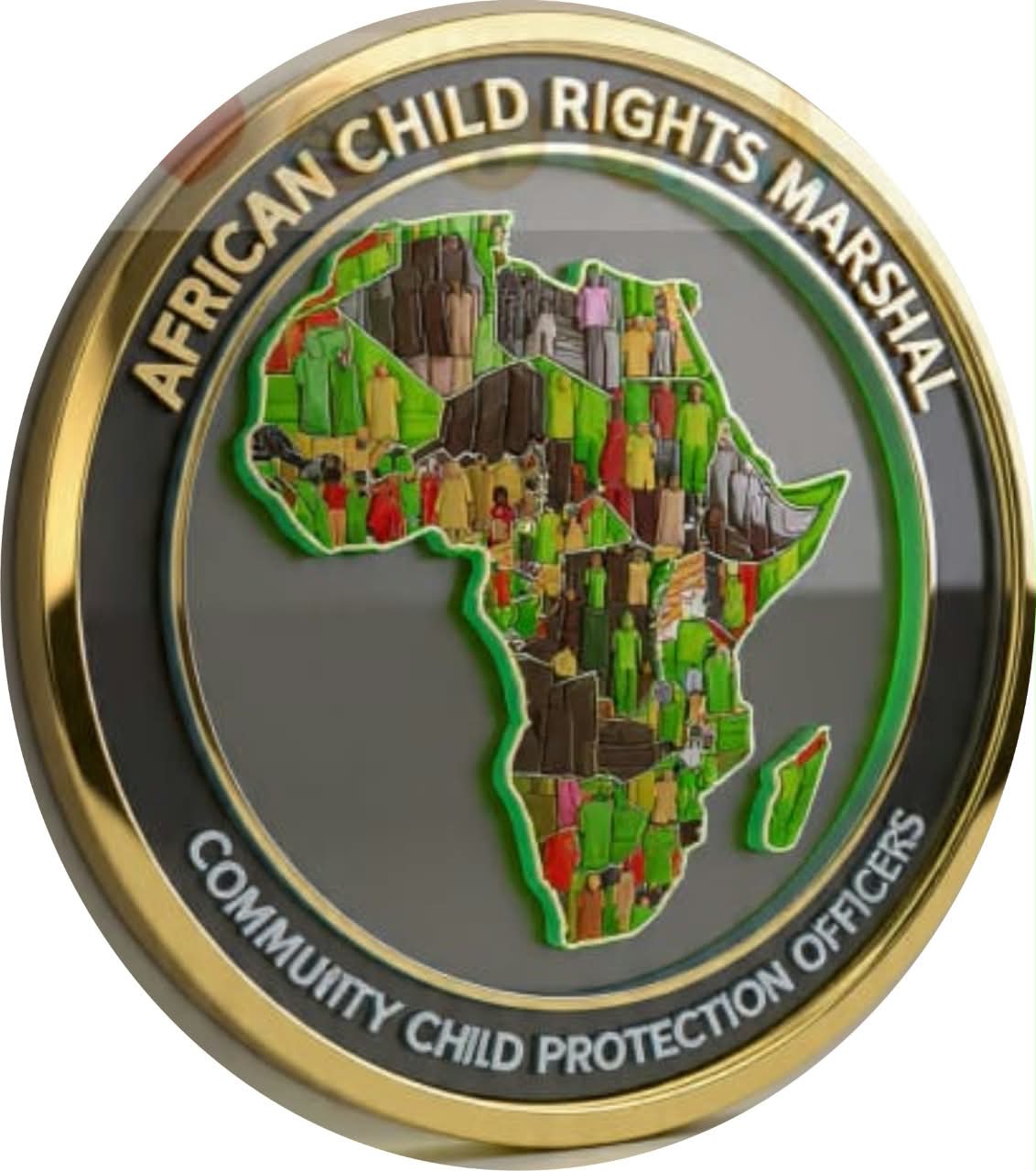
Pan-African initiative seeks to mobilise communities, professionals and child-rights advocates across 54 countries to prevent abuse, exploitation, and violence against children.
A proposed pan-African child-rights initiative, the African Child Rights Marshal (ACRM), is advancing a continental vision to strengthen community-based child protection, child-rights education, and advocacy across Africa.
The initiative seeks to mobilise professionals, intellectuals, human rights defenders, educators, community leaders, youth advocates, and other committed stakeholders across the continent’s 54 countries to build a coordinated network capable of taking child rights protection closer to families and communities.
ACRM is founded on the principles of the United Nations Convention on the Rights of the Child (UNCRC) and the African Charter on the Rights and Welfare of the Child (ACRWC), with a focus on translating child-rights commitments into practical community-level action.
The initiative is premised on the understanding that protecting children is a shared responsibility and cannot be achieved by governments and formal institutions alone.
Families, schools, communities, civil society organisations, traditional and religious leaders, professionals, and young people all have critical roles to play in creating environments where children can live, learn, develop, and participate safely.
Bringing child protection closer to communities
ACRM proposes the establishment of a network of trained and ethically guided Community Child Protection Officers who would support child-rights education, community awareness, prevention, safeguarding, identification of protection concerns, and appropriate referral.
The initiative’s proposed community-based approach is particularly focused on preventing harm before it occurs and ensuring that communities are better equipped to recognise and respond appropriately to risks facing children.
Among the challenges identified by ACRM are child abuse and violence, trafficking, child labour, child marriage, sexual exploitation, gender-based violence, neglect, harmful traditional practices, streetism, school dropout, substance abuse, illegal migration, discrimination, poverty, and social exclusion.
The initiative believes that many of these challenges manifest at household and community levels and therefore require strong grassroots education, prevention, and referral mechanisms.
A protection mechanism, not a law-enforcement agency
ACRM has also emphasised the distinction between its proposed community-protection role and the functions of state law enforcement and statutory institutions.
Community Child Protection Officers would not automatically be police officers, military personnel, judicial officers, or law enforcement officers.
An ACRM rank or appointment would not confer powers of arrest, detention, investigation, or prosecution.
Instead, serious child-protection concerns and suspected criminal conduct would be referred to the appropriate legally authorised government agencies or professional institutions in accordance with the laws of the respective country.
The initiative says this distinction is important to maintaining professional boundaries, accountability, and respect for national legal systems.
Education as a tool for prevention
Child-rights education forms a central pillar of the ACRM vision.
The initiative seeks to educate children and young people about their rights while equipping parents, teachers, community leaders, religious leaders, professionals, and the wider public with greater understanding of their responsibilities as duty bearers.
ACRM is also proposing a Child Rights and Moral Ethics Curriculum for primary, junior secondary, senior secondary, and tertiary institutions.
The proposed curriculum would combine child-rights education with moral values, responsible citizenship and leadership, with the longer-term objective of making the materials accessible through translations into major African languages.
The initiative further proposes the establishment of African Child Rights Marshal Students Clubs in educational and appropriate community settings.
The clubs would promote child-rights education, leadership, peer education, responsible citizenship, anti-bullying awareness, prevention of drug and substance abuse, and meaningful child participation.
A continental grassroots structure
ACRM’s proposed organisational framework would extend from the continental level to communities.
The structure comprises:
Continental Leadership → Regional Commands → National Commands → State/Provincial Commands → Local Government/District Commands → Community Commands → Community Child Protection Officers.
According to the initiative, the structure is intended to facilitate coordination, communication, training, reporting, accountability, safeguarding, and community mobilisation.
Within West Africa, the proposed West African Regional Command would coordinate the development of national structures across the sub-region while supporting training, capacity building, partnerships, monitoring, and safeguarding.
Participating countries would establish National Commands headed by National Commandants, with sub-national structures adapted to each country’s administrative and legal framework.
Empowering children beyond protection
The ACRM vision extends beyond responding to child-protection concerns to creating opportunities for children and young people to develop their potential.
The initiative proposes programmes covering sports and talent development, vocational skills, entrepreneurship, creativity, innovation, leadership, and youth empowerment.
It also envisages media and public-education programmes addressing child rights, family responsibility, drug and substance abuse prevention, and community protection.
One proposed programme, the “Child Rights Education and Drugs Harm Reduction Education Hour,” would use radio and television platforms to promote public education and dialogue.
ACRM says all activities involving children must comply with appropriate safeguarding requirements, consent and privacy protections, adult supervision, and applicable national laws.
Building partnerships for child protection
ACRM is seeking collaboration with governments, child-protection agencies, civil society organisations, schools, universities, traditional authorities, religious institutions, professional bodies, development partners, media organisations, health institutions, social workers, legal professionals, youth organisations, women’s organisations, disability organisations and community leaders.
The initiative maintains that no single organisation can address the complex child-protection challenges confronting Africa.
It therefore seeks to build partnerships capable of strengthening prevention, community awareness, referral systems, advocacy, and child participation.
Accountability must accompany leadership
As the initiative develops its proposed continental structure, ACRM says accountability and safeguarding must remain central to its operations.
Its proposed governance framework includes appropriate vetting, codes of conduct, safeguarding procedures, reporting mechanisms, conflict-of-interest management, disciplinary procedures, responsible financial practices and periodic performance reviews.
It further states that leadership positions should be based on suitability, integrity, competence and commitment, rather than personal relationships, status, or the number of people recruited.
The initiative’s guiding principle is:
“A Title Is Not Authority. Service Is Responsibility.”
ACRM says no rank or appointment should be used to intimidate, threaten, exploit, harass or unlawfully interfere with any person.
A 54-country vision for Africa’s children
The long-term ambition of the African Child Rights Marshal is to establish an active, accountable and sustainable presence across all 54 African countries.
However, the initiative says its emphasis will be on building functional structures capable of delivering meaningful child-rights education, community mobilisation, prevention and referral rather than simply creating titles or membership lists.
Its philosophy is captured in six words:
Educate → Prevent → Protect → Empower → Advocate → Transform.
The initiative says its ultimate objective is to contribute to an Africa where children understand their rights, families understand their responsibilities, communities actively protect children, young people participate meaningfully, and vulnerable children receive appropriate support and referral.
At the heart of the ACRM vision is a simple commitment:
No child should be left behind.
No child should be abused.
No child should be exploited.
No child should be silenced.
No child should grow without knowing their rights.
African Child Rights Marshal (ACRM)
Child Protection • Child Rights Education • Advocacy • Community Mobilisation • Youth Empowerment
Building safer communities. Protecting children’s dignity. Empowering the next generation.
About The Author
