





Ghana’s universities cannot survive on government funding alone — Prof. Aryeetey
 Human Rights Reporters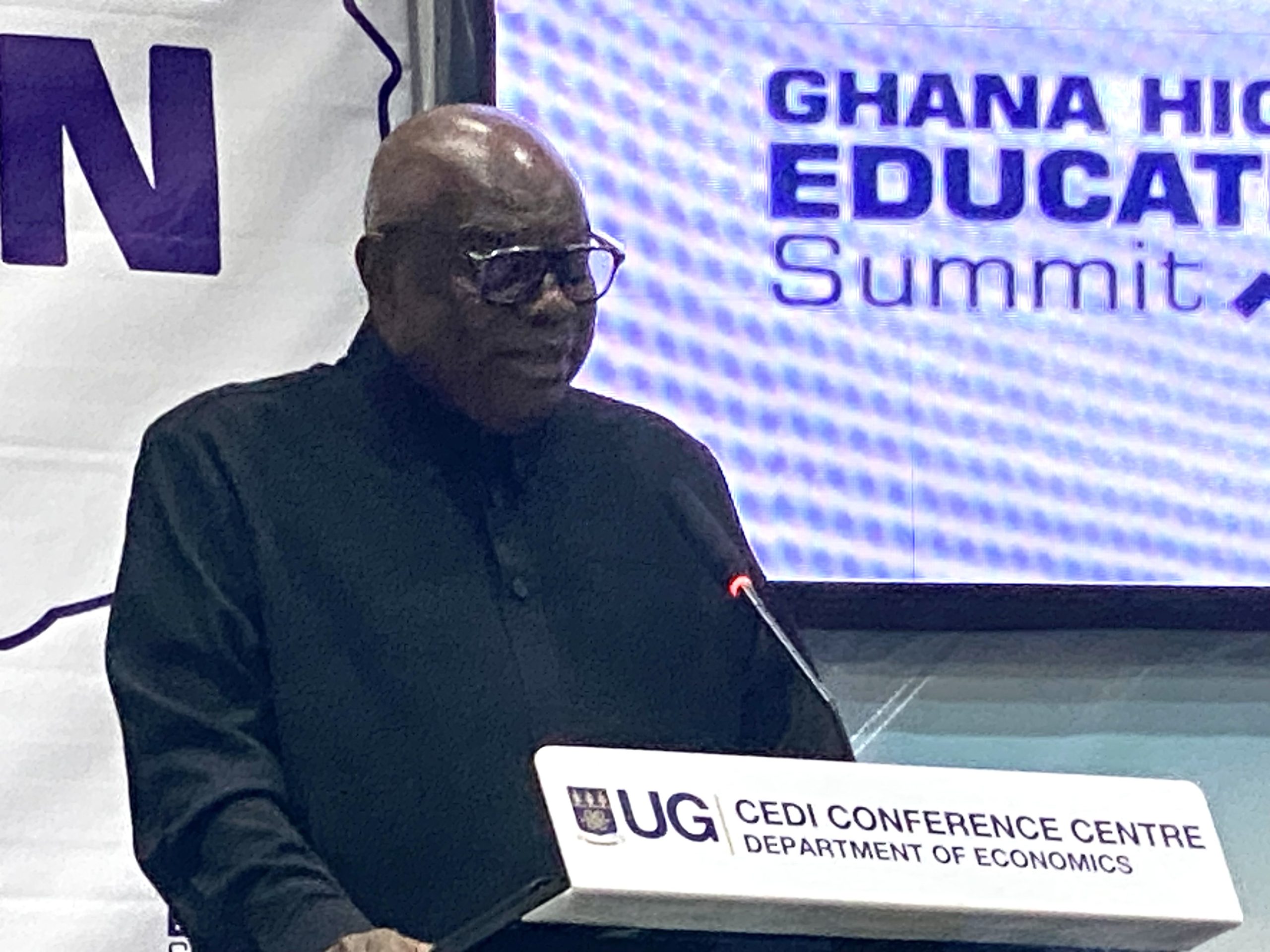
Ghana’s higher education system must urgently move away from its traditional dependence on government funding and embrace diversified, innovative, and sustainable financing models to keep universities accessible, competitive, and responsive to national development needs, Emeritus Professor Ernest Aryeetey has warned.
According to the former Vice-Chancellor of the University of Ghana, the growing demand for tertiary education, rising operational costs, expanding student populations, technological transformation, and increasingly expensive research have created financial pressures that can no longer be addressed by the state alone.
Prof. Aryeetey made the call when he delivered the keynote address at the inaugural Ghana Higher Education Summit held at the Cedi Conference Centre of the University of Ghana on Wednesday, August 26, 2026.
The summit, organised under the theme “Universities at Crossroads: Charting Sustainable Funding Pathways for Inclusive Higher Education,” brought together policymakers, university leaders, researchers, industry players, development partners, civil society organisations, alumni, students, and other stakeholders to deliberate on the future financing of higher education in Ghana.
Prof. Aryeetey said the question confronting Ghana was no longer whether the country should invest more in higher education but how it could finance the sector in a sustainable, equitable, and efficient manner.
“Tertiary education, including higher education, is not merely a public service. It is a strategic investment in national development,” he said.
He noted that universities are expected to train professionals, drive innovation, conduct research, provide solutions to national challenges, and facilitate social mobility, yet many institutions across Africa continue to operate with inadequate resources.
Government funding alone is unsustainable
Prof. Aryeetey argued that the traditional funding model, characterised by heavy reliance on government grants and tuition fees, had become increasingly unsustainable.
He cited data from a 2025 annual report, which he said showed that approximately 67.2 per cent of funding for tertiary education came from the government, stressing that the pattern needed to change.
He said although Ghana had increased the proportion of its education budget allocated to tertiary education, the allocations remained inadequate in the face of mounting demands.
“Most universities in Africa, including Ghana, are under-resourced and are expected to accomplish more with limited resources,” he said, describing the situation as “the bane of our era.”
He warned that the funding crisis also had serious implications for students, particularly those from low-income households.
According to him, high tuition and residential fees could prevent qualified students from accessing higher education, while some students who gained admission could be forced to abandon their studies because of financial difficulties.
He therefore called for financing mechanisms that balance institutional sustainability with affordability and inclusion.
Universities urged to become more entrepreneurial
Prof. Aryeetey proposed a diversified funding model that combines government support with internally generated revenue, philanthropy, industry partnerships, research commercialisation, performance-based funding, crowdfunding, community support, and other innovative financing mechanisms.
He urged universities to become more entrepreneurial by commercialising research, expanding consultancy services, offering short courses and online programmes, strengthening executive education, and developing ventures around their expertise and resources.
He cited agricultural production and food processing as examples of areas where universities could generate additional revenue.
He suggested that university departments could scale up the production and commercialisation of agricultural and food products to supplement traditional sources of funding.
He also encouraged universities to establish stronger links with industry, arguing that businesses benefit directly from universities through the supply of skilled graduates and research-driven solutions.
“Industries depend on academic institutions to churn out skilled graduates with innovative solutions to the challenges they face,” he said.
He called on the private sector to support universities through grants, endowments, scholarships, internships, infrastructure development, and innovation centres.
‘We have to change the way we do things.’
Prof. Aryeetey criticised what he described as the limited involvement of Ghana’s private sector in supporting university education, particularly in technical fields such as engineering.
He argued that universities should approach industry with clear proposals that demonstrate the mutual benefits of collaboration.
“We have to change the way we do things,” he stressed, pointing to examples from other African countries where universities and businesses have developed structured partnerships around research, practical training, innovation and employment.
He also advocated greater regional collaboration among African universities to reduce duplication, share research infrastructure and expertise, promote academic mobility, and establish centres of excellence capable of addressing common continental challenges.
Research funding must be prioritised
The former University of Ghana Vice-Chancellor further called for significantly increased investment in research and innovation, warning that Africa could not achieve structural transformation without generating its own knowledge and technological solutions.
He identified climate change, food security, public health, energy access, urban development, and digital transformation among the challenges requiring locally driven research.
“Increasing research funding will not only elevate scholarship distinction but also bolster national competitiveness and reduce reliance on foreign technologies,” he said.
He also urged universities to harness digital technologies, including artificial intelligence, digital learning platforms and virtual libraries, to improve accessibility, efficiency and financial management.
Equity must remain at the centre
While advocating greater student contributions to university financing, Prof. Aryeetey cautioned that funding reforms must not exclude students from disadvantaged backgrounds.
He proposed needs-based scholarships, sustainable student loan schemes, and income-sensitive financing arrangements to ensure that financial constraints did not prevent academically qualified students from pursuing higher education.
He particularly stressed the need to protect access for low-income students, students with disabilities, and those from rural and disadvantaged communities.
“No student with intellectual qualifications ought to be barred from pursuing higher education due to financial limitations,” he said.
He further called for stronger financial governance, including transparent fiscal planning, regular audits, performance evaluation, and accountability to ensure that both public and private resources were effectively utilised.
Universities need greater flexibility
Prof. Aryeetey also urged the government to create a policy and legislative environment that gives universities greater flexibility to determine their development priorities and mobilise resources.
He argued that universities have different histories, capacities, student populations, and ambitions and should therefore not be subjected to a uniform financing framework.
“It is wrong to treat universities as equal in their differentiation of public resources,” he said, advocating policies that allow institutions to develop according to their individual capacities and strategic ambitions.
Government pledges continued support
Delivering the address of Vice-President Professor Naana Jane Opoku-Agyemang, Deputy Minister for Education, Dr. Clement Apaak, said government recognised education as one of the most strategic investments Ghana could make in its future.
He said the government remained committed to expanding access, improving quality and positioning Ghanaian universities as globally competitive centres of excellence in teaching, research and innovation.
Dr. Apaak outlined several initiatives he said government had undertaken, including measures to ease the financial burden on first-year tertiary students, expanded student loan support, free tertiary education for eligible students with disabilities, reforms to the National Scholarship Scheme, investments in university infrastructure, and the operationalisation of the Ghana National Research Fund.
He said the research fund had received an initial GH¢100 million seed funding to support competitive research grants as well as doctoral and post-doctoral training.
However, he acknowledged that public financing alone could not meet the growing demands of higher education.
“The responsibility for financing higher education can no longer rest solely on government,” Dr. Apaak said, stressing the need for stronger partnerships among government, universities, industry, development partners, philanthropists, alumni and the private sector.
He said the future of Ghana’s universities would depend on diversified financing models that strengthened institutional resilience while protecting academic freedom, quality, and equity.
Summit to become annual national platform
Opening the summit, the Vice-Chancellor of the University of Ghana and Chair of the Summit, Professor Nana Aba Appiah Amfo, said the institution had convened the event to confront one of the most pressing questions facing universities globally: how to sustainably finance higher education while keeping it inclusive, accessible, excellent and relevant.
She said universities were under growing pressure to expand access, strengthen research, embrace digital transformation and respond to increasingly complex national and global challenges, even as resources continued to dwindle.
“Higher education has never been more important to national development than it is today,” Prof. Amfo said.
She stressed that sustainable funding could not be achieved by one stakeholder acting alone, calling for stronger partnerships, innovative resource mobilisation, entrepreneurial thinking within universities, meaningful industry engagement, strategic philanthropy and active alumni participation.
Prof. Amfo said the summit was not intended to be a one-off event but the beginning of an ongoing national platform for dialogue on the advancement and sustainability of higher education.
She urged participants to ensure that discussions from the summit translated into policy, institutional strategies, partnerships and concrete actions.
From conversation to action
The Director of Institutional Advancement at the University of Ghana, Prof. Gordon Abekah-Nkrumah, said the summit emerged from internal reflections on how the University of Ghana could build a stronger, more resilient and sustainable institution capable of addressing Ghana’s development challenges.
He said those reflections revealed that the challenges facing the University of Ghana were shared across Ghana’s higher education landscape.
The summit, he explained, was therefore conceived not merely to describe familiar challenges but to interrogate them, learn from different experiences, and develop practical solutions.
Prof. Abekah-Nkrumah said the organisers expected five key outcomes: honest conversations about the challenges confronting higher education, learning from diverse experiences, creative ideas for sustainable financing, partnerships extending beyond the summit, and practical recommendations outlining policy changes and responsibilities across the higher education ecosystem.
He said financing was only the starting point and that the broader ambition was to establish the Ghana Higher Education Summit as an annual platform for reflection, collaboration, evidence sharing, partnership building, and tracking progress.
The inaugural summit therefore ended with a clear message: Ghana’s universities are at a crossroads, and securing their future will require more than increased government allocations. It will require a fundamental rethink of the relationship between the state, universities, students, industry, alumni, philanthropists, and society.
For stakeholders at the summit, the challenge is no longer simply finding more money for universities but building a financing system capable of sustaining access, quality, research, innovation, institutional autonomy, and national development for generations to come.
About The Author