






“We’ve Hit Africa’s M-PESA Moment for Healthtech”—Dr. Ohanyido Sounds the Alarm Ahead of CPHIA 2025
 Human Rights Reporters
3 min read
Human Rights Reporters
3 min read
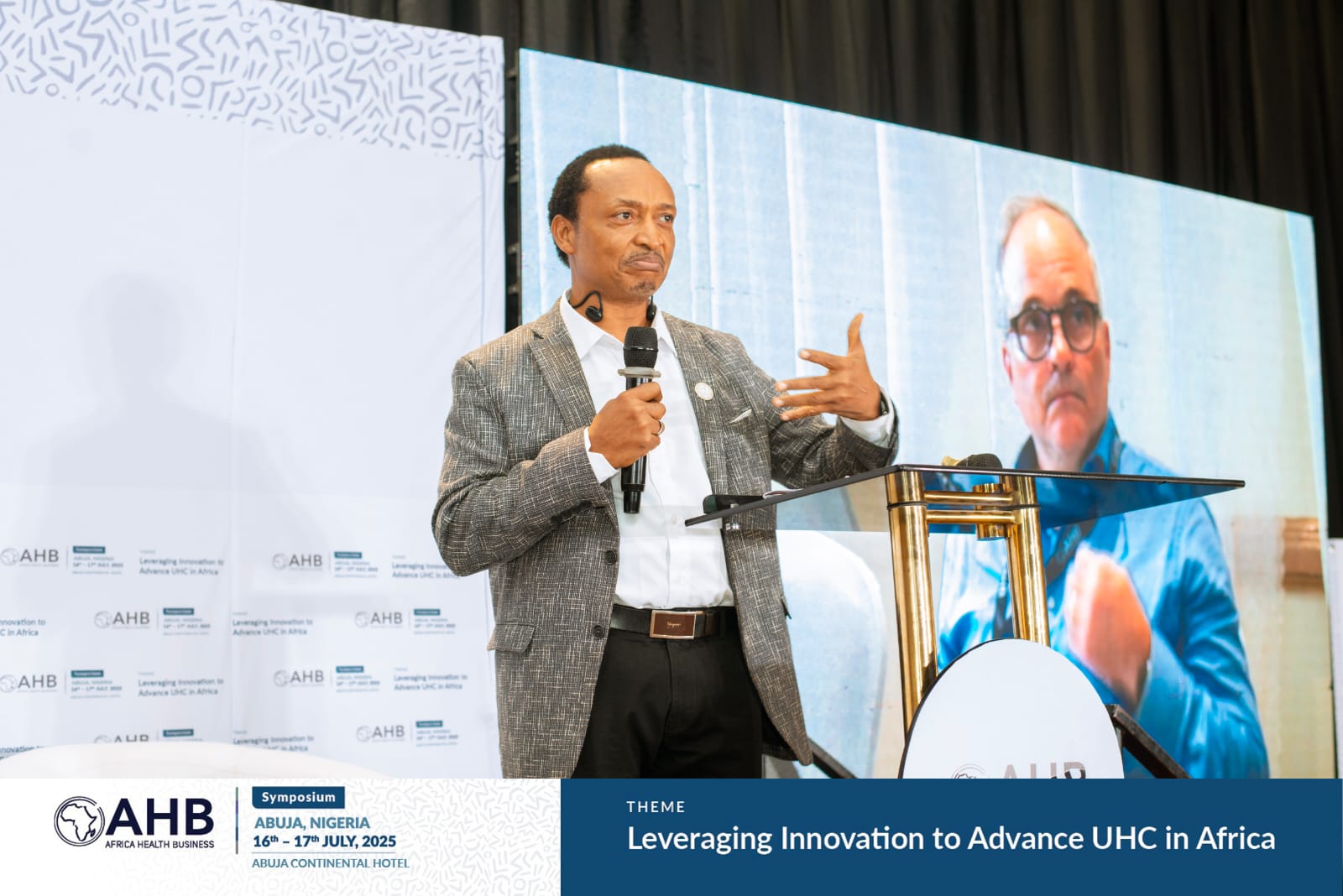
Africa is standing at the threshold of a health revolution driven by technology—and must act boldly to seize it.
That’s the powerful message from Dr. Francis Ohanyido, a leading public health expert and digital health advocate, who says the continent is experiencing its “M-PESA moment” in healthtech.
In an exclusive interview with Human Rights Reporters Ghana’s Joseph Wemakor ahead of the 4th Annual International Conference on Public Health in Africa (CPHIA 2025), Dr. Ohanyido issued a resounding call for African-led action, innovation, and self-determination in transforming health systems across the continent.
“We’ve arrived at Africa’s M-PESA moment for healthtech,” Dr. Ohanyido declared. “This is the time to harness digital innovation to revolutionize our healthcare systems—permanently and on our own terms.”
Dr. Ohanyido, who is the Director-General of the West African Institute of Public Health (WAIPH) and co-lead for Track 4 of the CPHIA 2025 Scientific Programme on Digital Innovation and Artificial Intelligence, is helping drive the agenda for what could be the continent’s most pivotal health convening yet.
CPHIA 2025 is scheduled for 22–25 October in Durban, South Africa, co-hosted by the Africa Centres for Disease Control and Prevention (Africa CDC) and the Government of South Africa, alongside the 8th BIO Africa Convention.
This year’s theme—“Moving towards self-reliance to achieve universal health coverage and health security in Africa”—speaks to a growing momentum for Africa to lead its own health transformation through policy, innovation, and political will.
“CPHIA is where knowledge becomes action,” Dr. Ohanyido noted. “It’s where Africa takes charge of its future—not with borrowed solutions, but with our own ingenuity.”
Already, he says, examples of African-led health innovation abound. Ghana’s ‘Gold Keys’ system is combating counterfeit medicines through digital verification. Rwanda is building a national electronic health record infrastructure under its Smart Rwanda initiative. Morocco is fast-tracking digital health through strategic investment in infrastructure. These are not isolated cases, Dr. Ohanyido stressed—they’re indicators of a continental shift.
But he warns that these gains risk being undermined by longstanding structural barriers. Drawing on insights from WAIPH, he outlined the “7 Ps” standing in the way of Universal Health Coverage (UHC): Poor Political Will, Policy Gaps, Population Growth, Provider-to-Patient Shortages, Paucity of Investment, Patchy Technology Integration, and Poor Infrastructure.
“We know the problems. Now we must act. The era of pilot projects and endless meetings must end. What we need now is ‘collabo-action’—collaboration that delivers results.”
Dr. Ohanyido insists that solutions must be African-owned and African-made. He praised Kenya’s M-PESA mobile money platform for how it transformed financial inclusion, urging leaders to think just as boldly in healthtech.
Similarly, South Africa’s involvement in the Medicines Patent Pool demonstrates how local production of essential medicines can reduce dependency on foreign supply chains.
“Health sovereignty is not a dream—it’s a necessity,” he said. “And that means supporting local innovators, scaling proven technologies, and investing in systems that work for our people.”
He described himself as an “Afroptimist,” confident that Africa has the financial tools to fund its own health transformation—if governments adopt the right mix of innovative financing models, domestic resource mobilization, and strategic partnerships with the private sector.
Dr. Ohanyido also emphasized the critical role of young professionals and the media in building a resilient health future. “Young Africans are not just future leaders—they’re leading right now. And journalists are the pulse of public accountability. Their pen is often mightier than the virus.”
He called on the media to spotlight African solutions, challenge complacency, and amplify the voices driving innovation. “You have a responsibility to shape how the world sees African health—and how we see ourselves,” he told Human Rights Reporters Ghana.
With CPHIA 2025 fast approaching, Dr. Ohanyido’s message is clear and urgent: Africa must take full ownership of its health systems, invest in its people and technology, and forge a new path that prioritizes equity, access, and resilience.
“Reimagining Africa’s health systems is not a solo journey. As the African philosophy of Igwebuike reminds us—we are only as strong as our collective,” he said. “This is our moment. Let’s own it.”
As delegates, policymakers, and health experts prepare to gather in Durban, the challenge has been laid bare—and so has the opportunity.
For Africa, the future of health is not just about survival. It is about sovereignty, innovation, and leadership.
About The Author
