






Youth Empowerment is a Right, Not a Privilege – Dr. Wemakor Urges Cohesion at Ghana Youth Federation Forum
 Human Rights Reporters
4 min read
Human Rights Reporters
4 min read

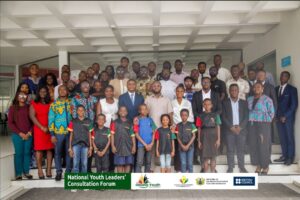
Convener of the Youth Sub-Platform of the Ghana Civil Society Organizations Platform on the SDGs, Dr. Joseph Kobla Wemakor has called for a united, strategic, and purposeful approach to youth development as he addressed national youth leaders at the National Youth Leaders Forum organized by the Ghana Youth Federation (GYF) at the British Council Auditorium in Accra on Thursday, 4th December 2025.
Speaking during the validation of the Federation’s National Strategic Action Plan (NSAP), Dr. Wemakor emphasized that youth empowerment is a right, not a privilege, and that the NSAP must actively guide policy, amplify youth voices, and drive tangible national change.
“We are gathered to shape a plan that speaks to the aspirations, struggles, and limitless potential of Ghana’s youth. A plan that must not sit on shelves but actively guide how youth voices inform policy, how young leaders influence national development, and how institutions respond to the real needs of young people,” he said, urging youth leaders to take ownership of the Plan and ensure it becomes a living, transformative tool for the nation.
Highlighting the importance of structured, non-partisan, youth-led governance anchored in the National Youth Authority Act (Act 939), Dr. Wemakor, who is the Founder and Executive Director of Human Rights Reporters Ghana (HRRG) stressed that the NSAP must focus on youth employment and entrepreneurship, safeguard human rights, build ethical and inclusive leadership capacity, and position young people as active partners in achieving the Sustainable Development Goals.
He further called for strong partnerships to open global opportunities for all Ghanaian youth, regardless of background.
“Let today be a reminder that the future we envision depends on the choices we make, the courage we demonstrate, and the unity we build.
The NSAP will only be as strong as our collective will to implement it,” Dr. Wemakor declared, pledging the full support of HRRG and the Youth Sub-Platform to ensure the Plan drives change and strengthens a unified youth front across the country.
The National Coordinator of the Ghana Youth Federation, Mr. Ali Ibraheem, presented the draft NSAP, explaining that it emerged from a strategic retreat held shortly after the Federation’s activation in September 2025.
Emphasizing inclusivity, he said, “Nothing for the youth without the youth,” revealing that the Plan had already been shared with youth leaders via a dedicated WhatsApp platform for feedback and broad participation.
Mr. Ibraheem highlighted key realities shaping the Plan: 73 percent of Ghana’s population is under 35, yet only 4 percent of youth groups are formally registered, youth unemployment continues to rise, and 60 percent of young people lack the digital literacy necessary to engage fully in modern civic and economic life.
Anchored in the African Union’s Agenda 2063, national youth policies, and existing government frameworks, the NSAP is structured around four objectives—representation, empowerment, policy advocacy, and civic participation—supported by four strategic pillars: institutionalization, district mobilization, youth diplomacy, and flagship programs, including the Ghana Youth Index Report to document and showcase youth activities nationwide.
The Federation announced a roadmap to activate youth structures in all 267 districts by the end of 2026. Leaders were urged to form local structures and join Technical Working Groups to refine and operationalize the NSAP.
Governance and transition processes were explained as fully transparent, with age requirements strictly enforced to maintain youth-centered leadership. The District Regional Governance (DRGs) Charter, designed to regulate elections and transitions free from political interference, will guide this process.
In his passionate address, the President of the Ghana Youth Federation, Sherif Ghali, underscored that the greatest challenge facing Ghana’s youth is disunity. “We have a very developed youth ecosystem, but it is weak.
Our problem is unity,” he stressed, announcing upcoming engagements with national authorities to present a unified youth agenda and urging youth leaders to stand together for stronger national influence.
Mr. Osman Abdulai Ayariga Esq., Chief Executive Officer of the National Youth Authority (NYA), lauded the Federation for strengthening youth coordination, noting that its independence under Act 939 allows it to advocate for youth interests without partisan interference.
“Coming together under one umbrella does not reduce your individual power—it multiplies it,” he said.
Representing the National Entrepreneurship and Innovation Programme (NEIP), Mr. Casper Sunday Capoli highlighted Ghanaian youth’s entrepreneurial potential, noting that seven out of ten young people aspire to start businesses, yet many face challenges in funding, training, and support.
He announced NEIP’s ongoing training initiatives for 10,000 young people and warned against forming parallel youth groups driven by personal interests, advocating instead for a unified national approach.
The keynote address by Dr. Elom Hillary Otchi, Technical Director at the Africa Institute of Healthcare Quality Safety and Accreditation, challenged youth leaders to move beyond policy drafting to active implementation.
He emphasized the need for digital literacy, accountability, and forward-looking skills to equip young people for a rapidly evolving national and global environment.
The National Youth Leaders Forum concluded with a powerful message of unity, strategic planning, and youth empowerment.
Dr. Wemakor’s call for cohesion and the GYF’s comprehensive roadmap together signal a historic shift—one that aims to mobilize and strengthen youth leadership across all 267 districts of Ghana, positioning the nation’s young people as active drivers of development and national progress.



About The Author
