







‘Without Youth Work, Ghana Will Miss Its Future’—Peter Anum Rallies Practitioners at National Stakeholders’ Dialogue
 Human Rights Reporters
4 min read
Human Rights Reporters
4 min read

Coordinator for the Commonwealth Alliance of Youth Workers Associations (CAYWA), Peter Anum, has issued a passionate call to youth development practitioners in Ghana to rise above fragmented efforts and build a formidable, professionalized youth work sector that earns national recognition and policy support.
“If youth workers didn’t exist, what would Ghana lose? Are we indispensable?” he asked pointedly during his keynote at a national stakeholders’ consultative dialogue on the professionalization of youth work in Ghana, held in Accra on Tuesday, September 30, 2025.
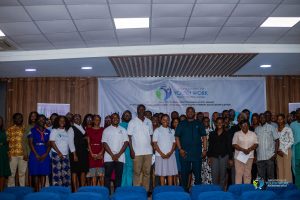
Organized by the Association of Youth Work Practitioners (AYWP) in partnership with the Ministry of Youth Development and Empowerment, the National Youth Authority (NYA), the Commonwealth Alliance of Youth Workers’ Associations (CAYWA), and the Commonwealth Youth Programme, the event brought together seasoned professionals, civil society actors, government representatives, development partners, and youth advocates to chart a course for formalizing youth work in Ghana.

Mr. Anum, one of the day’s most stirring speakers, painted both a warning and a vision.
He noted that when he started in youth development, only about 15 countries within the Commonwealth had national youth worker associations—a number that has now risen to nearly 35.
“Ghana cannot afford to be left behind. We must move from intent to action,” he stated, outlining four thematic pillars for building a strong association: Ghana’s positioning, rationale, objectives, and responsibilities of practitioners.
He urged for action-oriented steps—including national campaigns, structured mentorship, university partnerships, and recognition of youth work through national awards—all anchored in a professional, regulated framework.
Earlier, in an inspiring welcome address, Theodora Anti Williams, Co-Chair of the AYWP, emphasized the significance of the gathering as a pivotal step in transforming youth work in Ghana from a passion-led effort to a profession with standards, ethics, and national relevance.
“Not just anybody should get up and say, ‘I work with the youth.’ It is a profession, and we must be professional about it,” she declared. “Ghana’s young people deserve qualified, ethical, and empowered practitioners who understand that youth development is not a luxury—it is a necessity.”
Tracing the AYWP’s journey from its beginnings in 2017 to its present relaunch, Anti Williams hailed the support of the Commonwealth and stressed the urgency of building a future where youth workers are respected, protected, and given the tools to impact lives meaningfully.
“This is more than a name change. It is a call to action,” she said.
Delivering the keynote address on behalf of the Minister of Youth Development and Empowerment, Hon. George Opare Addo, Alhaji Inusah Mahama, Deputy CEO of the National Youth Authority, underscored the government’s commitment to supporting efforts that strengthen youth development infrastructure in the country.
He acknowledged that while Ghana boasts a large youth population, much of its potential remains untapped.
“We need to create systems that professionalize youth work so practitioners are better trained, better resourced, and better placed to support young people meaningfully.”
Representing the Commonwealth Secretariat, Layne Robinson, Head of Social Policy Development, offered a global perspective, reflecting on the Commonwealth’s 50-year investment in youth work across its member states.
“We want the very best for young people—just like we expect our doctors and teachers to be trained, we must demand the same of youth workers,” he noted.
He emphasized the importance of training, ethical frameworks, associations, and cross-country partnerships to support professionalization, while also posing a powerful reflection: “If youth work disappeared from your country today, what would happen?”
He invited Ghana to take up a greater role in global youth work networks and extended a special invitation to participate in the upcoming 5th Global Youth Work Conference in Malaysia this November.
From the civil society sector, Dr. Joseph Kobla Wemakor, Convener of the Ghana CSOs Platform on SDGs (Youth) and Executive Director of Human Rights Reporters Ghana, delivered a compelling solidarity message that affirmed youth work as a strategic tool for achieving the SDGs.
“Youth are not just leaders of tomorrow—they are the changemakers of today,” he said. “Recognition, resourcing, and partnerships are the three essentials to build youth work into a strong development force. The vibrancy of our democracy and economy depends on it.”
Adding a Pan-African and Caribbean dimension to the conversation, Tanya Merrick Powell, co-chair of CAYWA and technical director of the Jamaica Professional Youth Workers Association, called for a contextual, Afrocentric approach to youth development practice. She emphasized that youth work must be more than “policy papers and talk shops,” as practitioners often face the same marginalization as the youth they serve.
“Youth workers are facilitators, mentors, and sometimes even surrogate parents. We’re underpaid, often excluded, but we keep going because that is what we do,” she said, urging Ghanaian practitioners to ground their professional journey in history, culture, and local relevance.
About The Author
