


International Recognition: U.S. Student Praises HRRG Director’s Disability Rights Work
 Human Rights Reporters
3 min read
Human Rights Reporters
3 min read
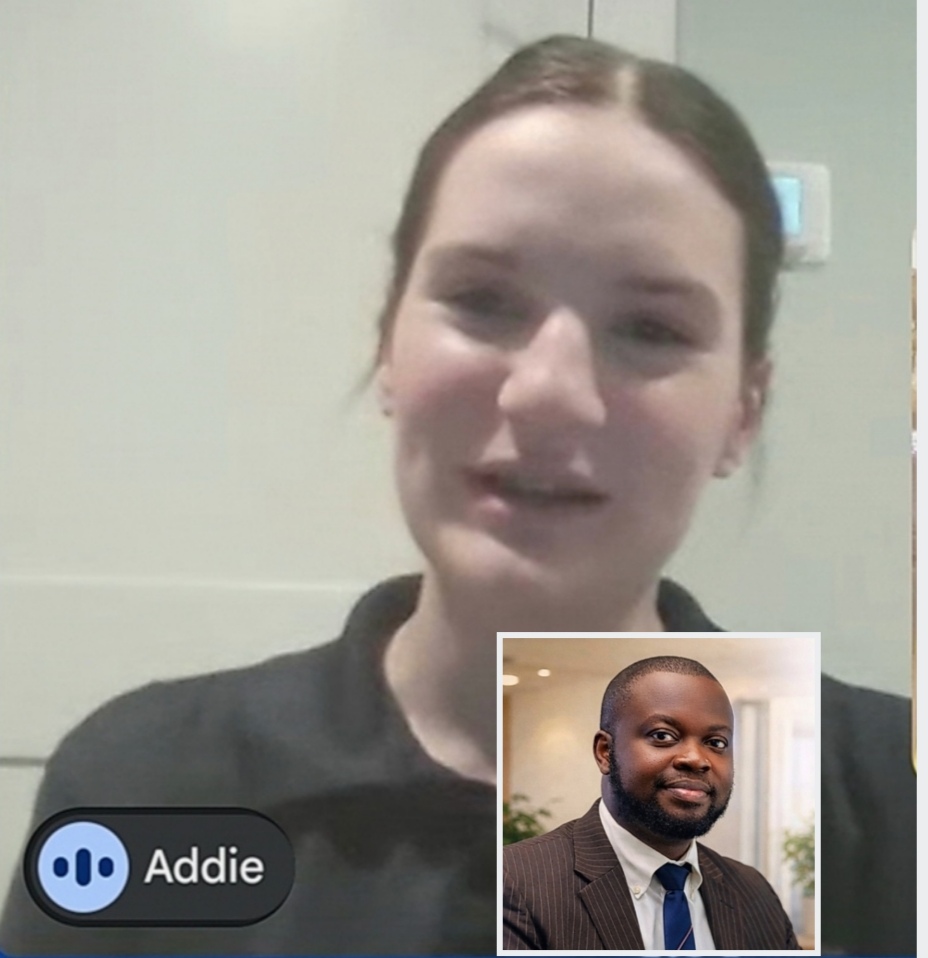
Accra, Feb. 15, 2026— A 16-year-old high school student in the United States has commended Dr. Joseph Kobla Wemakor, Executive Director of Human Rights Reporters Ghana (HRRG), for his advocacy efforts in promoting the rights of persons with disabilities in Ghana.
Miss Adelaide Brown, a student of All Saints’ Episcopal School in Fort Worth, made the remarks during a virtual interview with Dr. Wemakor on Saturday, February 14, 2026, at exactly 1800 hours GMT.
The 30-minute engagement formed part of her history class project titled “Borders and Boundaries,” which required students to examine divisions within societies.
Rather than focusing on geographical borders, Miss Brown chose to explore disability as a social boundary, examining stigma, discrimination, and systemic exclusion affecting persons with disabilities in Ghana.
“I really enjoy psychology and helping people,” she explained during the interview. “I didn’t want to do a physical boundary. I wanted to do a social boundary. During my research, I found out about Ghana and how people with disabilities are treated, and I found the topic very interesting.”
Miss Brown disclosed that she identified Dr. Wemakor through extensive online research into disability rights issues in Ghana, noting that his name frequently appeared in related publications and advocacy reports.
“I was researching a lot of articles and saw your name come up. I decided to look further into it and find your contact,” she said.
During the discussion, Dr. Wemakor provided insights into persistent stereotypes surrounding disability in Ghana, including misconceptions that associate disability with curses or spiritual punishment.
He highlighted challenges such as inaccessible infrastructure, gaps in inclusive education, employment discrimination, weak enforcement of disability laws, and the vulnerability of women and girls with disabilities.
He, however, acknowledged gradual progress driven by advocacy, increased public awareness, and youth engagement.
In a reflective moment, Dr. Wemakor asked the student whether she believed his advocacy efforts were making an impact.
“Yes, I think you are,” Miss Brown responded.
Her remarks, observers say, underscore growing international awareness of Ghana’s disability rights discourse and the work of civil society organisations in advancing inclusion and accountability.
Miss Brown further expressed interest in visiting Ghana in the future to contribute to advocacy efforts.
“I would love to go to Ghana and really help in any way I could,” she stated.
Dr. Wemakor encouraged the young researcher to pursue her passion for advocacy, noting that global youth engagement remained critical in addressing social inequalities.
The engagement highlights the increasing global interconnectedness of human rights advocacy and demonstrates how local efforts can attract international academic interest.
Ghana has enacted the Persons with Disability Act, 2006 (Act 715), and ratified the United Nations Convention on the Rights of Persons with Disabilities.
However, stakeholders continue to call for stronger enforcement mechanisms to address persistent structural and attitudinal barriers confronting persons with disabilities.
The cross-border dialogue between the Ghanaian advocate and the U.S. student illustrates the importance of sustained conversations in dismantling social boundaries and promoting dignity, equality, and inclusion for all.
Watch the interview briefly here:
About The Author
