







Empowering Youth Workers Is Investing in Ghana’s Future – Dr. Joseph Wemakor
 Human Rights Reporters
3 min read
Human Rights Reporters
3 min read

Ghana – September 30, 2025 Dr. Joseph Kobla Wemakor, Convener of the Ghana Civil Society Organizations (CSOs) Platform on SDGs (Youth), has issued a compelling call for urgent action to professionalize and empower youth work in Ghana, asserting that the country’s development and democratic future depend on the strength of its youth workforce.
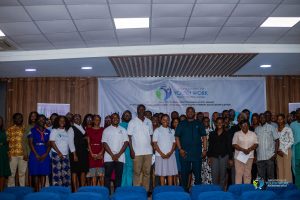
“Empowered youth workers mean empowered youth—and empowered youth mean a stable, prosperous nation,” Dr. Wemakor declared at the National Dialogue on the Professionalization of Youth Work, held in Accra.
The high-level gathering was organized by the Association of Youth Work Practitioners (AYWP) in collaboration with the Ministry of Youth Development and Empowerment, the National Youth Authority (NYA), and international partners including the Commonwealth Youth Programme and the Commonwealth Alliance of Youth Workers’ Associations (CAYWA).
Dr. Wemakor—who also serves as Executive Director of Human Rights Reporters Ghana (HRRG)—challenged stakeholders to move beyond lip service and commit to real, measurable investment in the youth work profession.
“Youth workers are not just volunteers—they are the invisible architects of our democracy. Their contributions must be recognized, resourced, and institutionalized,” he said.
He called for a new era of youth development anchored in structured policy frameworks, sustainable funding, and professional standards. “It’s time to move from passion to profession,” he urged.
Youth Work: From Passion to Profession The dialogue convened key voices across government, civil society, and development sectors to discuss the critical role youth workers play in addressing unemployment, civic apathy, and social exclusion—while cultivating leadership, peace, and inclusion among Ghana’s growing youth population.
Theodora Anti Williams, Co-Chair of AYWP, delivered a firm message: youth work is a vital profession, not a hobby.
“Not everyone should wake up and decide they work with young people,” she said. “This is a profession that demands training, ethics, and clear standards. Ghana’s youth deserve no less.”
She called for robust certification systems, dedicated funding, and policies that position youth workers at the center of national development strategies.
CAYWA Participation and Unified Vision As part of the event, CAYWA Ghana’s national coordination team—led by Peter Anum—played a key role in the conversations, reflecting the alliance’s continued support and engagement in Ghana’s youth development space.
“Youth workers must be united, equipped, and organized to demand the recognition and resources they deserve,” Anum stated. “This isn’t just about advocacy—it’s about building an ecosystem that works for Ghana’s future.”
He emphasized the importance of building a strong national network of practitioners capable of influencing policy, shaping best practices, and ensuring accountability within the youth development space.
A Government Commitment to Youth Work Delivering the keynote on behalf of the Minister for Youth Development and Empowerment, Hon. George Opare Addo, the Deputy CEO of the National Youth Authority (NYA) acknowledged the vital role youth workers play—and the gaps that still exist in their support.
“Investing in youth work is not optional—it’s strategic,” he said. “Government is ready to collaborate with all partners to ensure youth workers are trained, protected, and positioned to deliver lasting impact.”
Global Perspective and Commonwealth Solidarity Joining the event virtually, Tanya Merrick Powell, Co-Chair of CAYWA and Technical Director of the Jamaica Professional Youth Workers Association, praised Ghana for advancing the dialogue on youth work professionalization.
“Ghana is showing leadership by pushing youth work into the national conversation,” she noted. “This isn’t just about policy—it’s about people, culture, and impact.”
Layne Robinson, Head of Social Policy Development at the Commonwealth Secretariat, emphasized that youth work is now globally recognized as a specialized discipline that requires formal training and ethical grounding. He invited Ghanaian stakeholders to participate in the 5th Global Youth Work Conference in Malaysia this November.
“Just like we expect our doctors and teachers to be trained, we must demand the same of youth workers,” Robinson said.
Looking Ahead The event concluded with a collective sense of urgency and resolve. Stakeholders committed to advancing national standards, formal training pathways, and sustainable funding mechanisms that would give youth work its rightful place in Ghana’s development framework.
Dr. Wemakor closed with a powerful charge to all involved:
“This is more than a sector—it’s a safeguard for Ghana’s future. If we want a peaceful, prosperous, and inclusive country, we must invest in those working on the frontlines with our youth every day.”


About The Author
