






AWLA Marks 40 Years of Intestate Succession Law with Call for Urgent Reform
 Human Rights Reporters
4 min read
Human Rights Reporters
4 min read
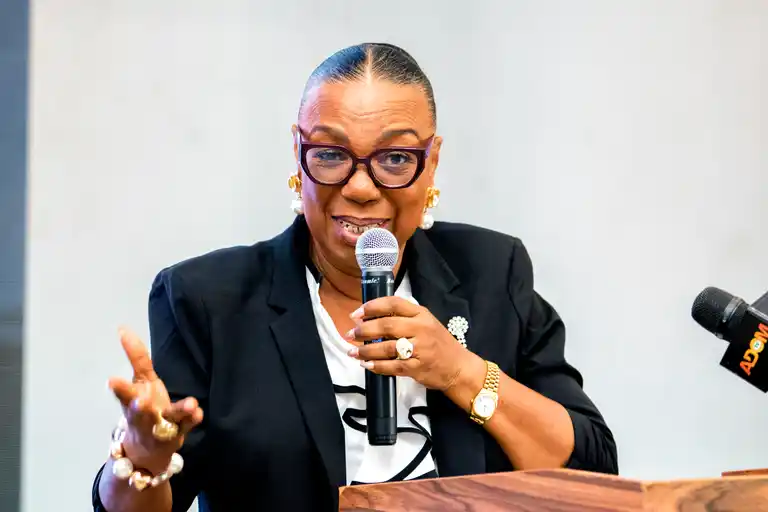
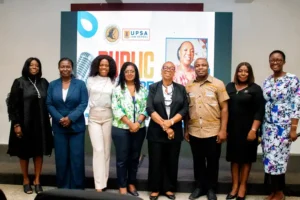
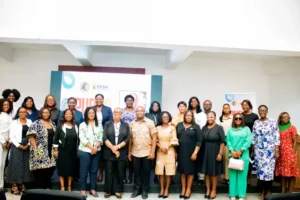
The African Women Lawyers Association (AWLA) has renewed calls for the urgent passage of Ghana’s long-delayed Intestate Succession Amendment Bill as legal experts, legislators, civil society actors and students gathered at the conference hall of the University of Professional Studies, Accra (UPSA) on Tuesday December 18, to commemorate 40 years of the Intestate Succession Act, 1985 (PNDCL 111).
The public lecture, held at the UPSA Auditorium, was on the theme:
“The Intestate Succession Act, 1985 (PNDCL 111) @ 40: Relevance, Challenges and Emerging Issues.”
UPSA Hosts Critical Legal Dialogue
Delivering the welcome address, Dr. Francisca Kusi-Appiah, Vice-Dean of the UPSA Law School, described the 40-year milestone as a fitting moment for reflection and reform.
“Life is often said to begin at 40, and this anniversary presents a unique opportunity to review what the law has achieved and the reforms that are now necessary for our benefit and for future generations,” she said.
She commended AWLA for its collaboration with the university, noting that intestate succession remains a core social justice issue, particularly for families affected when individuals die without making wills.
AWLA Reaffirms Commitment to Women’s Rights
Chairperson of AWLA-Ghana, Kristine Lartey Esq., welcomed participants and traced the association’s origins to the vision of its founder and life patron, Mrs. Betty Mould-Iddrisu, former Attorney-General of Ghana.
Founded in 1998, AWLA, she said, was established to strengthen networking among African women lawyers and advocate legislative reforms to enhance the legal status of women.
“The Intestate Succession Act has been of longstanding interest to AWLA, and this lecture allows us to assess its impact after four decades of application by the courts,” she stated.
PNDCL 111: A Revolutionary Law
Delivering the keynote lecture, Hon. Betty Mould-Iddrisu, Founder of AWLA-Ghana and former Attorney-General, described the Intestate Succession Act as one of the most transformative social legislations in Ghana’s history.
She recounted the harsh realities faced by widows and children prior to 1985, particularly under matrilineal and patrilineal inheritance systems that denied surviving spouses any right to property.
“Widows were routinely evicted from their homes, and children were left without protection. PNDCL 111 fundamentally altered that injustice by recognising the legal rights of spouses and children,” she said.
She credited the law, along with related PNDC enactments, as pivotal in reshaping customary practices and advancing gender justice.
Achievements and Enduring Relevance
According to Hon. Mould-Iddrisu, the Act has over the years:
- Guaranteed inheritance rights for spouses and children
- Reduced abusive customary inheritance practices
- Introduced certainty and uniformity into estate distribution
- Advanced gender equality, particularly for women
Despite these gains, she stressed that societal changes have exposed significant gaps in the law.
Key Challenges Highlighted
The lecture identified major challenges including:
- Excessive fractionalization of estates
- Inadequate provisions for polygamous and blended families
- Joint ownership of matrimonial homes between surviving spouses and children from different unions
- Lack of clear rules on jointly acquired marital property
- Insufficient protection for minor and school-going children
- Failure to address modern assets such as digital property and pensions
- Persistent conflicts between statutory and customary law
Call for Passage of Amendment Bill
Hon. Mould-Iddrisu expressed disappointment that the Intestate Succession Amendment Bill, first introduced in 2009, has yet to be passed into law.
“Forty years on, we are still operating a law with known inadequacies. Reform is not optional—it is necessary,” she stated.
Parliamentary and Government Assurances
Representing the Women’s Caucus in Parliament, Hon. Phillis Naa Koryoo Okunor, MP for Awutu Senya East, acknowledged the law’s progressive intent but said its enforcement remains uneven, especially in rural areas.
She revealed that discussions on reform have resumed in Parliament and urged stakeholders to sustain advocacy.
Providing an update on the bill’s status, Mercedez Konadu Mari, Principal State Attorney at the Office of the Attorney-General, confirmed that a revised bill is being prepared for re-laying in Parliament.
“The bill is not about men versus women. It is about protecting families and ensuring fairness and certainty when death occurs,” she said, adding that the Attorney-General remains committed to seeing the bill passed.
Stakeholders Urged to Build Coalitions
Panelists including ACP Owusuwaa Kyeremeh (DOVVSU), Georgette Francois Esq., and Mrs. Sheila Minkah-Premo Esq. called for broad-based coalitions involving civil society, religious bodies and traditional authorities to support reform efforts.
Passing the Baton
In her closing remarks, Effiba Amihere Esq., Executive Director of AWLA-Ghana, urged younger lawyers and students to sustain the advocacy.
“This law emerged from lived experiences of injustice. It is now the responsibility of the next generation to ensure it continues to protect families in today’s Ghana,” she said.



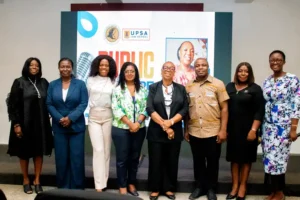


Source:Joseph Wemakor|humanrightsreporters.com
About The Author
