








‘Don’t Go Small, Go Big’ – GICC President Challenges Ghanaian Businesses to Seize Indian Opportunities
 Human Rights Reporters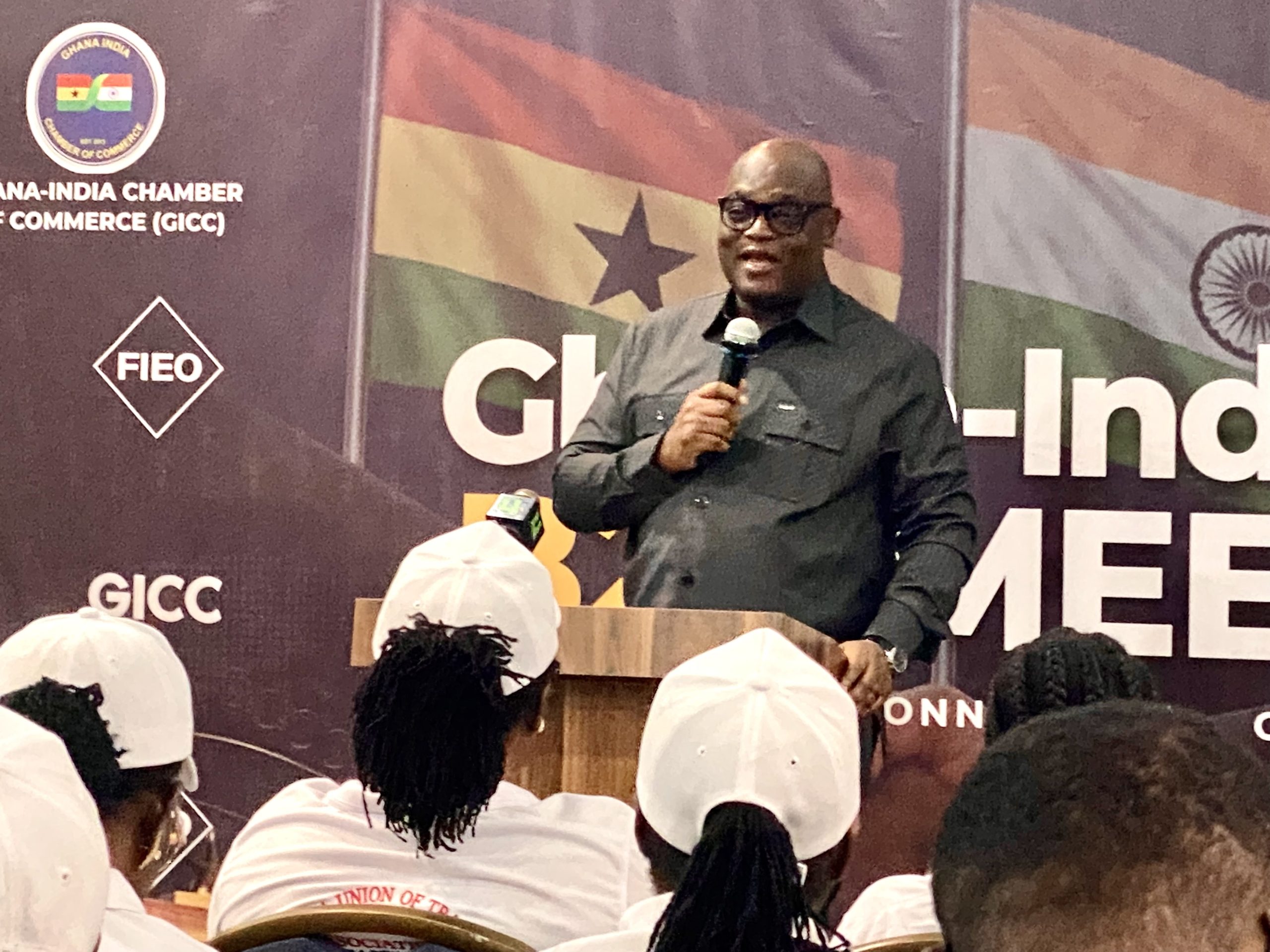
Accra, Oct. 5, 2026 – President of the Ghana-India Chamber of Commerce (GICC), Dr. Kwabena Ekremet, has challenged Ghanaian businesses to think bigger and take full advantage of the growing opportunities for trade and investment with India.
Addressing Ghanaian businesses and members of a 15-member Indian business delegation at a business-to-business (B2B) engagement in Accra, Dr. Ekremet urged local enterprises to approach the engagement with ambition and negotiate partnerships capable of significantly expanding their businesses.
“I’m asking that those who are here today should do well, should engage with the Indians, and should negotiate well and make sure that you’re asking for more,” he said.
“If you came here to order a container of goods, make it ten containers. The Indians are ready to support.”
His message was summed up in a direct appeal to Ghanaian businesses: “Don’t go small. Go big.”
The GICC President also encouraged businesses that are not yet members of the Chamber to consider registering in order to position themselves for better opportunities in the future.
The remarks were made at the Royale Fiesta Hotel on October 5, 2026, during an engagement designed to connect Ghanaian businesses with Indian companies and explore opportunities for trade, investment, and commercial partnerships.
Indian delegation explores Ghanaian market
The 15-member Indian delegation, which arrived in Ghana on October 5, comprises companies operating in sectors of mutual interest to Ghana and India.
The engagement, held under the theme “Restore, Connect, Grow,” is expected to facilitate discussions between Indian companies and Ghanaian buyers, distributors, manufacturers, and investors.
India’s High Commissioner to Ghana, H.E. Surinder Bhagat, welcomed the delegation and described the engagement as an important opportunity to deepen the longstanding relationship between the two countries.
He said India and Ghana had developed strong relations spanning education, healthcare, capacity building, development cooperation, and trade, with more than 1,000 Indian companies currently present in Ghana.
The High Commissioner said the two countries possessed complementary economic strengths that could be leveraged to promote investment, technology transfer, manufacturing, and inclusive growth.
He identified healthcare and pharmaceuticals, medical devices and hospital supplies, agribusiness and agro-processing, textiles and fashion, engineering and hardware, paper and packaging, chemicals, plastics, fishing products, and general trade as areas with significant potential.
According to him, the B2B engagement should go beyond networking to create lasting partnerships, establish supply chains, facilitate technology transfer, and develop joint ventures that create value for both countries.
GIPC highlights $6.5bn trade
The Chief Executive Officer of the Ghana Investment Promotion Authority (GIPC), Mr. Simon Madjie, said the economic relationship between Ghana and India had significant room for further expansion.
He disclosed that trade between the two countries increased from approximately $3 billion in 2024 to about $6.5 billion in 2025.
Ghana’s exports to India increased from approximately $1.7 billion to $5.2 billion during the period, with gold accounting for about 85 percent of Ghana’s exports.
Other Ghanaian exports to India include petroleum oils, cashew nuts, oil seeds, and wood products.
India, meanwhile, exports machinery and mechanical appliances, vehicles, pharmaceutical products, plastics, iron and steel products, and chemicals to Ghana.
Mr. Madjie also disclosed that GIPC records showed more than 1,000 registered Indian investment projects in Ghana between 1994 and 2026, representing an estimated foreign investment value of approximately $12.07 billion.
Call for stronger Ghana-India business partnerships
The GIPC CEO said the next phase of Ghana-India economic relations should focus on greater investment in productive capacity, increased value-added production and exports, as well as deeper technology transfer.
He identified opportunities for Indian businesses in Ghana’s agriculture, agro-processing, healthcare, manufacturing, pharmaceuticals, textiles, logistics, digital economy, and financial services sectors.
Ghana’s position as host of the African Continental Free Trade Area (AfCFTA) Secretariat, he said, also provided Indian investors with an opportunity to use the country as a base to access the wider African market.
He assured the delegation that GIPC was ready to support investors in identifying opportunities, establishing businesses, navigating regulatory processes, and expanding their operations.
From “one container” to bigger partnerships
The GICC President’s challenge comes at a time when Ghana and India are seeking to translate their longstanding diplomatic relationship into stronger commercial and investment partnerships.
For Dr. Ekremet, however, the immediate task is for Ghanaian businesses to recognise the opportunities available and be prepared to scale up.
His appeal to entrepreneurs to turn a single container order into ten encapsulated the broader message of the engagement: that Ghanaian businesses must move beyond small-scale transactions and pursue larger, sustainable commercial relationships with Indian partners.
With the Indian delegation engaging Ghanaian buyers, distributors, manufacturers, and investors across multiple sectors, stakeholders expressed optimism that the meetings could lead to new business deals, investment partnerships, technology transfers, and expanded market opportunities for enterprises in both countries.
About The Author
