







Political vigilantism evolving into less visible networks, moving online – National Security Coordinator
 Human Rights Reporters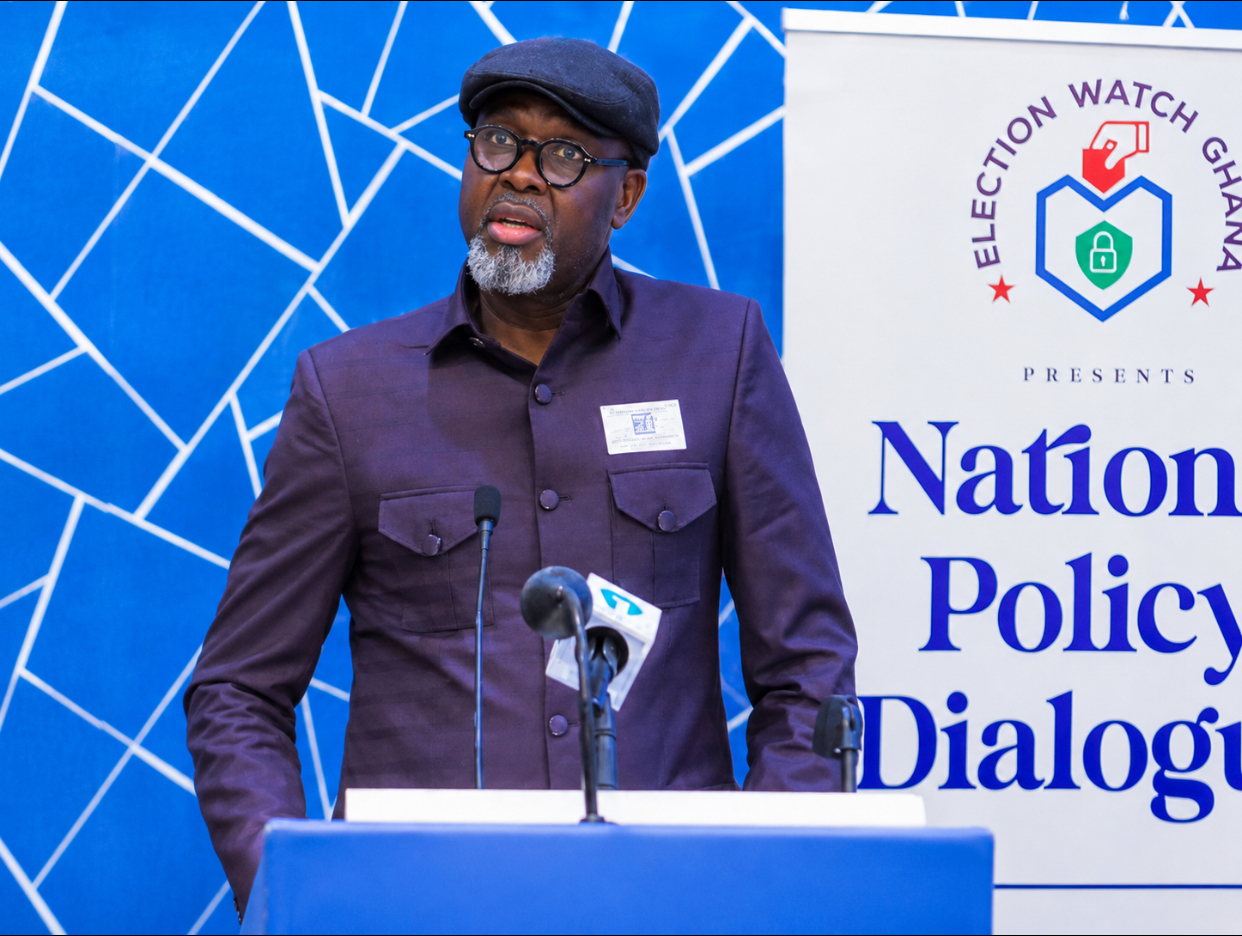
Ghana’s National Security Coordinator, Commissioner of Police (COP) Abdul-Osman Razak, has warned that political vigilantism may be evolving into less visible and more difficult-to-track networks, with political mobilisation increasingly shifting to social media and other informal channels.
He said although the visibility of organised vigilante groups had declined following the enactment of the Vigilantism and Related Offences Act, 2019 (Act 999), the threat could not be considered completely eliminated.
COP Abdul-Osman made the observation at a National Policy Dialogue on political vigilantism organised by Election Watch Ghana at the Kofi Annan International Peacekeeping Training Centre (KAIPTC) in Accra on Tuesday, August 25, 2026.
The dialogue brought together security agencies, political parties, civil society organisations, traditional and religious leaders, academia, and the media to assess the implementation of Act 999 and its implications for Ghana’s national security and democratic governance.
Vigilante groups changing form
According to the National Security Coordinator, some groups previously associated with organised political vigilantism had been reorganised into less conspicuous structures.
He said some had resurfaced under descriptions such as “internal security teams,” “volunteer task forces,” and “community security initiatives,” while others had dissolved into looser networks that were more difficult for security agencies to track.
He also noted that political mobilisation had increasingly moved online.
“Mobilisation has moved online, on social media, private districts, private security arrangements, or other informal channels,” he said.
COP Abdul-Osman’s warning suggests that the reduction in the visibility of traditional vigilante groups should not necessarily be interpreted as the complete disappearance of the phenomenon.
Act 999 still relevant
The National Security Coordinator said Act 999 remained an important legal instrument in protecting Ghana’s democratic order and ensuring that political groups did not operate outside the constitutional security framework.
He noted that the law was intended to prohibit the creation, organisation, recruitment, training, arming, funding, and support of political vigilante groups.
He said the emergence of organised groups capable of intimidating communities, interfering with electoral processes, or exercising coercive authority outside legitimate state institutions posed a direct threat to state authority.
According to him, the historical development of political vigilantism in Ghana demonstrated the dangers posed by informal political forces when they evolved into organised groups with uniforms, command structures, and weapons.
He said such groups could undermine confidence in the democratic transfer of power, weaken trust in state institutions, and threaten the social stability of the country.
‘Law must be enforced without fear or favour’
COP Abdul-Osman acknowledged that there were gaps in the implementation of Act 999, including instances where legal processes had been slow.
He nevertheless stressed that the existence of the law remained significant and that it must be enforced consistently.
He called for enforcement to be guided by intelligence assessments, evidence, and professional judgment rather than partisan considerations.
“The credibility of Act 999 can be challenged by what it prohibits and how it is enforced. Enforcement should never be perceived as favouring one group over the other,” he said.
He further called for enforcement protocols to be standardised and investigations to be evidence-based.
He also stressed the importance of accountability mechanisms and urged that security personnel responsible for political-security decisions and investigations be professionally insulated from informal political interference.
Prevention must begin before elections
The National Security Coordinator also advocated a preventive rather than reactive approach to political violence.
He said by the time election campaigns were fully underway, security agencies were often dealing with containment rather than prevention.
According to him, individuals who eventually become involved in violent political groups often begin their mobilisation months before elections.
He therefore recommended intelligence monitoring and stakeholder engagement between 12 and 18 months before elections.
Youth engagement and civic education, he said, should begin between nine and 12 months before elections, while active monitoring of political mobilisation should intensify about six months before the polls.
He also called for targeted preventive operations during the campaign period, together with rapid response and confidence-building measures throughout the electoral process.
Relative improvement since Act 999
COP Abdul-Osman acknowledged that Ghana had recorded relative improvement in election-related security since the passage of Act 999.
He said the overt presence of organised civilian groups that previously operated openly, sometimes with uniforms and identifiable structures, had declined.
He, however, cautioned that recent developments on social media indicated the need for continued vigilance.
He also credited improved election security planning and increased public awareness of Act 999 through civic education and sustained media attention.
According to him, Ghanaians were now more familiar with the concept of political vigilantism and the legal consequences associated with organising or sponsoring such groups.
Shared responsibility for national peace
The National Security Coordinator stressed that preventing political violence was not solely the responsibility of security agencies.
He said citizens, political parties, traditional and religious leaders, civil society organisations and the media all had a role to play in ensuring that political competition did not descend into organised intimidation or violence.
His remarks echoed the broader objective of the National Policy Dialogue, which sought to assess the effectiveness of Act 999 while identifying practical measures to strengthen Ghana’s democratic governance and national security.
Election Watch Ghana seeks measurable action
The Executive Director of Election Watch Ghana, Ms. Rose Austin, said the engagement was intended to move the national conversation beyond expressions of concern towards concrete and measurable action.
She called for a candid assessment of what had worked and what had not worked since the enactment of Act 999, as well as the identification of legal, institutional, operational, and political bottlenecks affecting its implementation.
She also warned that perceived selective application of the law could undermine public confidence in security and justice institutions and create conditions for political impunity.
Protecting Ghana’s democratic gains
Special Envoy to the Sahel States, Lt. Gen. (Rtd.) Larry Gbevlo-Lartey, who delivered remarks on behalf of the Chief of staff, Dr. Julius Debrah, similarly urged stakeholders to develop concrete and trackable commitments to strengthen Ghana’s democratic resilience.
He stressed that Ghana’s reputation as a beacon of democratic stability in Africa had been built through decades of institutional maturity and collective effort and that protecting that legacy required constant vigilance and institutional courage.
The National Policy Dialogue therefore placed renewed attention on the changing nature of political vigilantism and the need for Ghana’s security, political, and civic institutions to remain ahead of emerging threats.
For the National Security Coordinator, the challenge is no longer simply about identifying traditional vigilante groups but also recognising and addressing the newer, less visible forms of political mobilisation that could threaten peace, public order, and Ghana’s democratic processes.
Edited by Joseph Kobla Wemakor
About The Author
