



HRRG Global RightsShield Awards 2026: Ing. Dr. George Asiedu honoured for sanitation leadership after 2023 intervention
 Human Rights Reporters
7 min read
Human Rights Reporters
7 min read
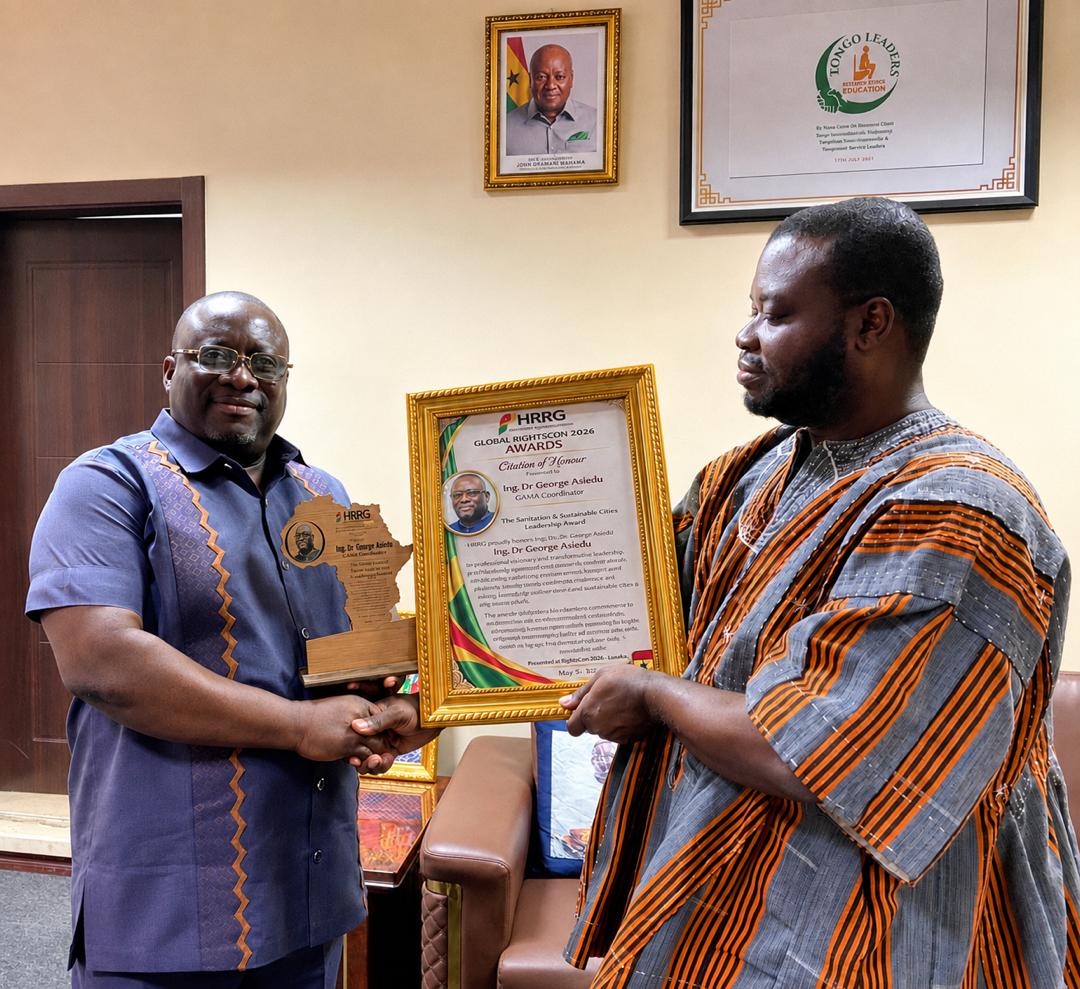
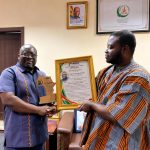
Human Rights Reporters Ghana (HRRG) has honoured the Coordinator of the Greater Accra Metropolitan Area Sanitation and Water Project (GAMA-SWP), Ing. Dr. George Asiedu, with its Global RightsShield Award for Sanitation & Sustainable Cities Leadership, recognising his contribution to sanitation and water development and a documented 2023 intervention that resulted in the provision of a toilet facility for a teenage girl and her family.
The award was presented to Ing. Dr. Asiedu at his office in Accra on Wednesday, August 19, 2026, following the inaugural presentation of the HRRG Global RightsShield Awards in Abuja, Nigeria.
Ing. Dr. Asiedu received the honour under Category 2 of the 2026 awards programme in recognition of his leadership and contribution to sanitation, water access, public health, community resilience, and sustainable urban development.
The inaugural awards were presented under the theme, “Championing Human Rights and Democratic Renewal,” during the 3rd Africa High-Level Civil Society Anti-Money Laundering and Countering the Financing of Terrorism (AML/CFT) Conference held at the Abuja Continental Hotel in Abuja, Nigeria, from July 14 to 17, 2026.
The 2023 report that became a catalyst for intervention
At the heart of HRRG’s recognition of Ing. Dr. Asiedu is a 2023 sanitation intervention involving a teenage girl and her family in Gbegbeyise in the Greater Accra Region.
In June 2023, HRRG Executive Director and human rights journalist Dr. Joseph Kobla Wemakor published an investigative report titled “Living without a toilet at home: The traumatic tale of a 15-year-old typhoid fever patient.”
The report, originally published on GhanaWeb and subsequently republished by other media platforms, highlighted the plight of a 15-year-old girl who was battling typhoid fever while living with her family in a home without a toilet facility.
Beyond the immediate sanitation challenge, the report drew attention to the implications of the family’s circumstances for health, privacy, dignity and the right to live in a safe and healthy environment.
The publication subsequently came to the attention of the Greater Accra Metropolitan Area Sanitation and Water Project.
According to records available to HRRG, Ing. Dr. Asiedu and his team assessed the situation and took steps to respond to the family’s sanitation needs.
The intervention ultimately resulted in the provision of a toilet facility for the teenage girl and her family.
HRRG said documentary evidence relating to the original 2023 report and the subsequent intervention formed an important part of the basis for the recognition.
The organisation considers the case a significant example of how public-interest journalism can identify otherwise overlooked social challenges and create a pathway for institutional action.
“You did not just build a toilet; you helped restore dignity.”
Presenting the award, Dr. Joseph Kobla Wemakor commended Ing. Dr. Asiedu for responding to the family’s plight after it was brought to public attention through the media.
“Ing. Dr. George Asiedu, I want to sincerely commend you for what you did in 2023 when you came across our report on the plight of that 15-year-old girl battling typhoid and living with her family without a toilet facility,” Dr. Wemakor said.
He noted that the intervention represented more than the construction of a physical facility.
“You did not simply read the story and move on. You saw a vulnerable family in distress and recognised that there was something within your mandate that you could do to change their situation. You acted, and that action made a real difference,” he said.
According to Dr. Wemakor, the episode remains one of the most meaningful examples of journalism translating into tangible change during his career as a human rights journalist.
“For me, that intervention remains one of the most rewarding moments in my journey as a human rights journalist. I have written many stories, but there is something fundamentally different when a story does not end with publication—when it moves from the pages of a newspaper into action and ultimately changes the living conditions of a vulnerable family,” he said.
He further told Ing. Dr. Asiedu:
“You did not just build a toilet. You helped restore dignity. You helped reduce a health risk. You gave that family something many of us take for granted—the basic right to live in a safe and dignified environment.”
“That is why this recognition is deeply deserved,” Dr. Wemakor added.
A model of media, civil society and institutional collaboration
Dr. Wemakor also used the occasion to emphasise the importance of cooperation between the media, civil society organisations and public institutions in addressing challenges affecting vulnerable communities.
“The story of that young girl reminds us that journalists, civil society organisations and public institutions do not have to work in isolation,” he said.
“When journalism identifies a problem, when institutions are willing to listen, and when leaders are prepared to act, extraordinary things can happen.”
He said the response demonstrated the potential of combining investigative journalism with institutional responsibility.
“Your response showed us what is possible when those forces come together,” he added.
For HRRG, the 2023 experience represents a practical illustration of the organisation’s approach to human rights journalism—using credible reporting to draw attention to issues affecting vulnerable people while encouraging constructive institutional responses.
Beyond the 2023 intervention
While the teenage girl’s case was an important factor in the recognition, HRRG stressed that the award was not based solely on that intervention.
The organisation said Ing. Dr. Asiedu’s broader professional record in the sanitation and water sector also informed the decision.
As Coordinator of GAMA-SWP, he has been involved in initiatives focused on water supply, sanitation, hygiene, behavioural change and community resilience across urban and peri-urban communities.
According to HRRG records, his professional career spans more than three decades of engineering and development experience.
He holds an Executive Master’s in Business Administration and is a globally certified Project Management Professional (PMP).
GAMA-SWP has also been associated with several recognitions for its development and engineering interventions, including the “Most Impactful WASH Project of the Decade” recognition by CONIWAS, an Engineering Excellence Award from the Ghana Institution of Engineering, and recognition as 2nd Runner-Up Project Manager of the Year by the Ghana Chapter of the Project Management Institute.
HRRG said the professional record, combined with the documented 2023 intervention, demonstrates the breadth of Ing. Dr. Asiedu’s contribution to the water, sanitation, and hygiene (WASH) sector and sustainable urban development.
Sanitation is a human dignity issue
HRRG said the recognition is also rooted in its broader understanding of sanitation as a human rights and human dignity issue.
Access to safe water, adequate sanitation and a healthy living environment has implications beyond infrastructure, particularly for vulnerable households, children and young people.
The 2023 case provided a practical example of how inadequate sanitation can expose families to health risks while undermining privacy and dignity.
What could have remained an invisible hardship became a matter of public concern after the journalist’s report brought the family’s circumstances to wider attention.
Institutional action subsequently followed, resulting in the provision of a toilet facility for the family.
HRRG said the case demonstrates the importance of responsive leadership and institutional accountability when credible reports expose challenges affecting vulnerable communities.
It also underscores the potential for constructive partnerships between journalists, civil society organisations and public institutions to produce meaningful outcomes.
About the HRRG Global RightsShield Awards
The HRRG Global RightsShield Awards were inaugurated in Abuja, Nigeria, in 2026 to recognise exceptional individuals and institutions whose leadership, service and achievements contribute meaningfully to human rights, democratic governance, justice, civic freedoms, diplomacy, sustainable development and human dignity across Africa and beyond.
The inaugural programme was initially launched as the HRRG Global RightsCon Awards before being rebranded as the HRRG Global RightsShield Awards as part of HRRG’s efforts to establish a stronger and independent identity for the international honours programme.
The 2026 awards were presented under the theme:
“Championing Human Rights and Democratic Renewal.”
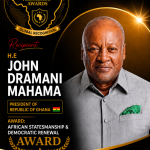
The inaugural honourees included President John Dramani Mahama of Ghana; President Bola Ahmed Tinubu of Nigeria; Kenyan legal scholar, orator and Pan-Africanist Prof. Patrick Loch Otieno Lumumba; Ghana’s Foreign Affairs Minister, Hon. Samuel Okudzeto Ablakwa; Executive Director of Spaces for Change West Africa, Ms. Victoria Ibezim-Ohaeri; emerging human rights leader and youth advocate Joshua Elikplim Adjei; Eminence Lead International LBG; and international digital rights organisation Access Now and its RightsCon Global Team.
HRRG said the recognition of Ing. Dr. Asiedu reflects its commitment to celebrating leaders whose professional responsibilities translate into tangible improvements in the lives of individuals and communities.
About Human Rights Reporters Ghana
Human Rights Reporters Ghana (HRRG) is a globally recognized human rights and media advocacy non-governmental organisation committed to advancing human dignity, social justice, democratic accountability, civic participation, and sustainable development through advocacy, journalism, research, capacity building, and strategic partnerships in Ghana, across Africa, and beyond.
Through its journalism and advocacy initiatives, HRRG works to bring human rights concerns to public attention and promote constructive responses to challenges affecting vulnerable individuals and communities.
The HRRG Global RightsShield Awards provide an international platform for recognising exceptional leadership, service, and transformative contributions to human rights, sustainable development, justice, dignity, and humanity.
About The Author
