







Ghana’s Security Under Strain: Experts warn Mahama must move beyond crisis containment
 Human Rights Reporters
3 min read
Human Rights Reporters
3 min read
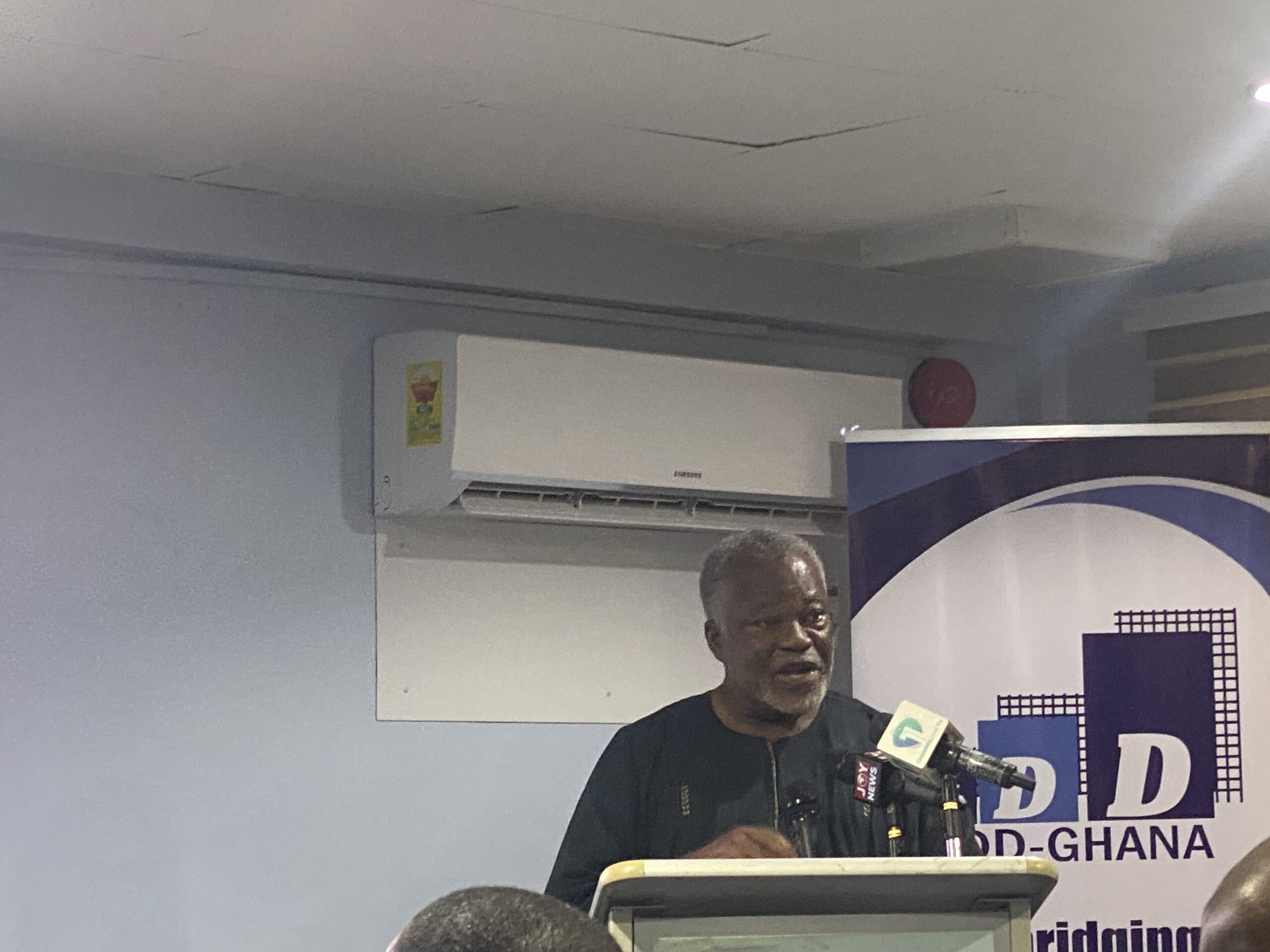
Accra, February 19, 2026 – As Ghana completes the first year of the John Dramani Mahama administration, questions are emerging over whether short-term security gains are translating into long-term reform.
At the Center for Democratic Development (CDD-Ghana) First-Year Assessment forum, experts painted a picture of an armed forces stretched thin, entrenched conflicts simmering, and institutional weaknesses that threaten both national stability and public confidence.
Retired Colonel Festus Aboagye, a peace and security expert, argued that while the government has achieved early stabilization, the real test lies in building institutions capable of preventing crises rather than just containing them.
Using the Bawku conflict as a case study, Col. Aboagye noted that tensions had escalated sharply before the 2025 transition. In June of that year, military deployment was doubled from 400 to 800 personnel to contain violence, allowing trade and movement along the Walewale–Bawku–Bolgatanga corridor.
While these measures provided temporary relief, he warned that the underlying political and historical dynamics remain unresolved. “Treating Bawku purely as a rule-of-law issue ignores its deeper social roots. Sustained mediation and a broader peace architecture are essential,” he said.
The challenges, Col. Aboagye noted, are not limited to conflict zones. Ghana’s armed forces, with roughly 14,000 personnel, remain professional but materially overstretched, with modernisation efforts lagging behind expectations.
Inherited debt obligations and declining defence budgets constrain operational capacity, leaving the country vulnerable to both internal and external threats.
The forum also revisited tragic incidents that underscore structural weaknesses. The August 6 helicopter crash, which claimed eight lives, reflected not only equipment shortages but a broader institutional culture in which political considerations sometimes override professional advice.
A subsequent recruitment exercise, in which six young women died, highlighted the pressures of high youth unemployment and the risks of politicized recruitment.
Col. Aboagye warned that digital reforms and transparent recruitment processes are urgently needed to safeguard both personnel and the credibility of the armed forces.
On the policy front, the recent arms amnesty initiative was described as “bold but insufficiently data-driven.” Col. Aboagye called for a comprehensive national disarmament strategy and a defence modernization audit to ensure that the country’s security architecture is prepared for evolving threats.
He also urged the government to return national security coordination structures to strictly civilian, constitutionally defined roles, emphasizing that professional, depoliticized oversight is critical to long-term stability.
The CDD-Ghana assessment confirmed that while the Mahama administration has demonstrated responsiveness, enforcement gaps and structural weaknesses remain across governance, anti-corruption, environmental protection, and national security.
The think tank warned that Ghana risks falling into a cycle of crisis management if reforms remain superficial, urging a shift toward institutional redesign that can sustain peace, strengthen the armed forces, and protect citizens’ rights.
Experts at the forum also highlighted the interconnectedness of security with other national challenges. For instance, political interference, inadequate enforcement of environmental regulations, and youth unemployment all feed into broader security vulnerabilities.
Col. Aboagye concluded that “if the reset is to mean anything, it must move from deployment to redesign—rebuilding institutions, modernizing the armed forces, and embedding civilian oversight to protect both the state and its people.”
As Ghana enters the second year of the Mahama administration, the message from security specialists is clear: short-term deployments and crisis containment are not enough.
Without structural reforms, modernization, and transparent governance, the nation risks repeating old mistakes and leaving key security gaps unaddressed.

About The Author
